
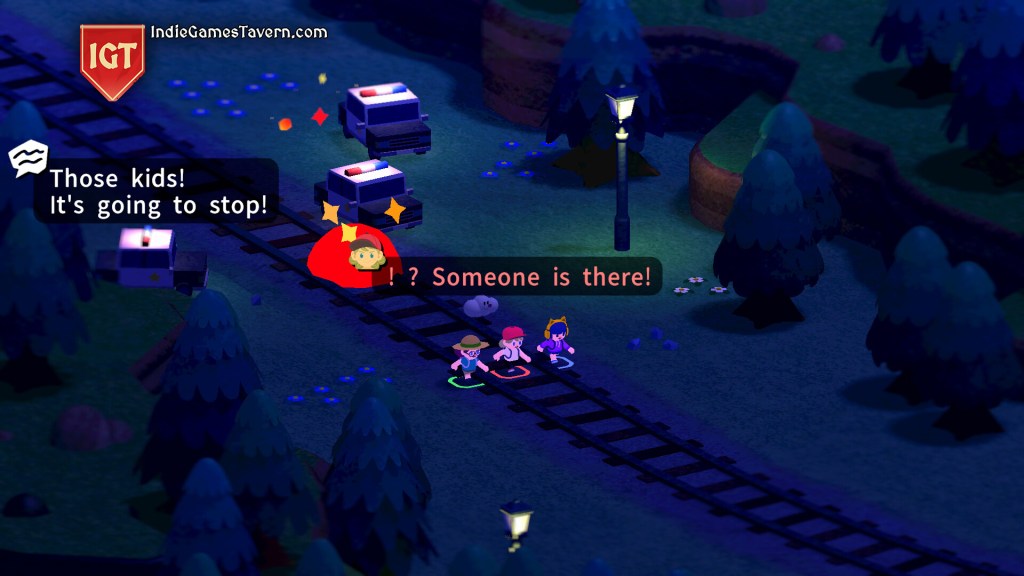
When a game promises to deliver a full RPG experience in just ten minutes, eyebrows raise—and expectations must be managed. But SUMMER ROAD dares to do exactly that. Developed by Rebuild Games and published by Phoenixx Inc., this indie title combines automatic combat, fast decision-making, and loot-swapping mechanics into a compact, replayable package.
In this indie game review, we’ll explore whether SUMMER ROAD successfully balances brevity with depth, how its systems hold up over multiple runs, and why it might appeal (or not) to fans of indie games and auto-roguelites. Let’s hit the road.
Premise & Core Loop
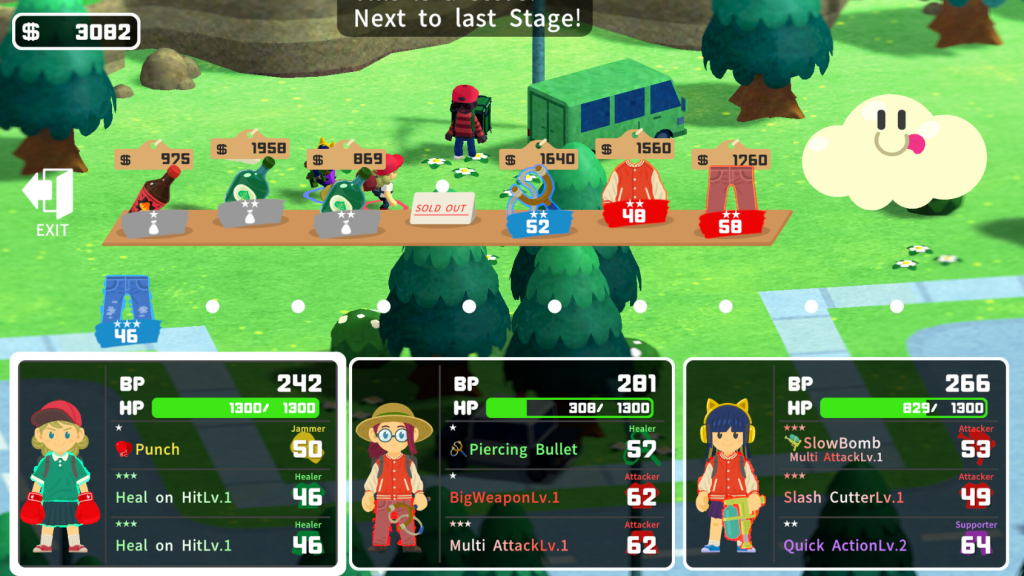
In SUMMER ROAD, you control a party of characters who fight automatically. Your main interaction is managing gear—swapping weapons and outfits to influence battle outcomes.
Each run is designed to last about 10 minutes, with different routes, random events, and loot drops shaping the journey. The narrative premise is modest: a mysterious creature named Mogmo appears in a quiet countryside town, and three children set out to find its rightful place in the world.
Between “Town Phase” (narrative, exploration, gear planning) and “Adventure Phase” (auto combat, route choices), SUMMER ROAD straddles a balance between passive and active gameplay.

Strengths
1. Accessible, Low-Commitment Runs
A big draw is how time-friendly the experience is. Not everyone has hours to sink into a single session, and SUMMER ROAD understands that, offering satisfying play in short bursts. This makes it ideal for casual players, or those who want to squeeze in a run between other tasks.
2. Gear Swapping as Core Strategy
Because combat is automatic, your primary levers are gear selection and timing your swaps. This gives the game a puzzle-like quality: figuring out which combinations of weapons, outfits, and gear create useful synergies. Some pieces of gear trigger unique combo actions (e.g. “Dash Bat Swing”) when paired.
3. Replayability via Random Events & Routes
Each run offers different branching paths, random events, and loot drops. Combined with gear experimentation, this ensures that no two runs feel exactly alike. The randomness keeps you chasing new builds and endings.
4. Charming Aesthetic & Simple Narrative
The game presents a nostalgic, cute charm while reimagining that in a 3D-ish style. The story is light but serves as a motive for progression. For fans of indie games, this kind of modest but coherent narrative feels fitting.
Weaknesses & Challenges
1. Limited Depth for Hard-Core Players
Because runs are short and combat is automatic, the depth leans heavily on gear variety and randomness. Players seeking fine-tuned control may find the lack of direct control frustrating. Some fans of roguelites might lament the minimal direct input.
2. Randomness Can Be Harsh
Luck in loot drops and path events can swing runs wildly. A great build can still crumble against a bad event or unlucky route—leading to runs feeling unfairly punishing at times.
3. Early Content May Be Sparse
At present, the quantity of routes, enemy variety, and gear may be modest (especially prior to wide release). Players who push deeper may hit a plateau until more content is added.
4. Shallow Narrative Engagement
While the premise is sweet, the story is minimal. If you expect a narrative-heavy RPG, SUMMER ROAD might feel lightweight. It’s more of a framework to frame the gear-swapping loop than an epic storytelling vehicle.
Systems Breakdown
Gear & Combo System
This is the heart of SUMMER ROAD. Weapons, outfits, and gear pieces have synergies. When equipment is swapped, the AI’s behavior and combo moves adapt. Mastering which gear triggers optimal combos is a satisfying meta-puzzle.
Mogmo, the creature central to the story, can consume gear to synthesize or combine skills. How you feed it determines which abilities it develops—giving another layer of customization.
Automatic Combat & AI Behavior
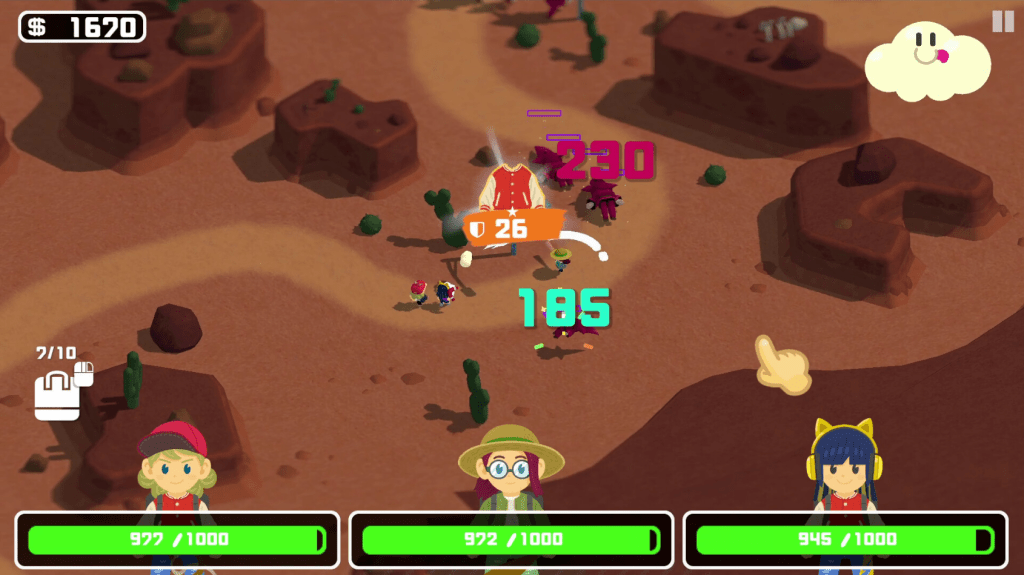
Characters act on their own in combat. Their performance depends heavily on gear synergy and the configuration you set before the run. This means your strategic preparation matters more than your in-battle input.
Route Choice & Random Events
During runs, you’ll face branching paths and random events—some beneficial, some challenging. Choosing safer or riskier paths becomes a delicate decision, especially when run time is limited.
Town Phase & Exploration
In between runs, you spend time in town, interacting with NPCs, managing gear, and shaping your next run. This gives a small but welcome breather between fast runs.
Tips & Advice for New Players
- Experiment often with gear combinations—even less obvious pairs may trigger hidden synergies.
- Don’t overcommit on risk—sometimes safer paths with steady loot outperform high-risk gambles.
- Use the Town Phase wisely—gear planning here is your edge.
- Expect runs to fail; failure is part of the loop. Learn from bad runs to optimize future attempts.
Conclusion
SUMMER ROAD is an earnest, carefully-designed indie entry that shows how small scope doesn’t mean small ambition. It may not redefine the genre, but it offers a clean, satisfying loop tailored for modern rhythms of gaming. As an indie game review entry in your blog, this title has the mix of accessibility, intrigue, and depth to draw in readers—especially those who’re always on the lookout for indie games that punch above their weight.
SUMMER ROAD Review by Indie Games Tavern.
Your cozy corner of indie gems. We’re more than just a indie game review channel, we’re a sanctuary for the unsung heroes of indie gamedev. Born from a love of the underdog, the quirky, and the downright brilliant, the Indie Games Tavern is your trusty guildhall for discovering the finest indie games—those hidden gems, wild experiments, and heartfelt labors that big studios often overlook. Picture this: a weathered oak table laden with scrolls—each a indie game review penned by your tavern scribes, folks like me who’ve braved the pixelated wilds to bring you tales of triumph, terror, and everything in between.
 Indie Games Tavern
Leave a comment