
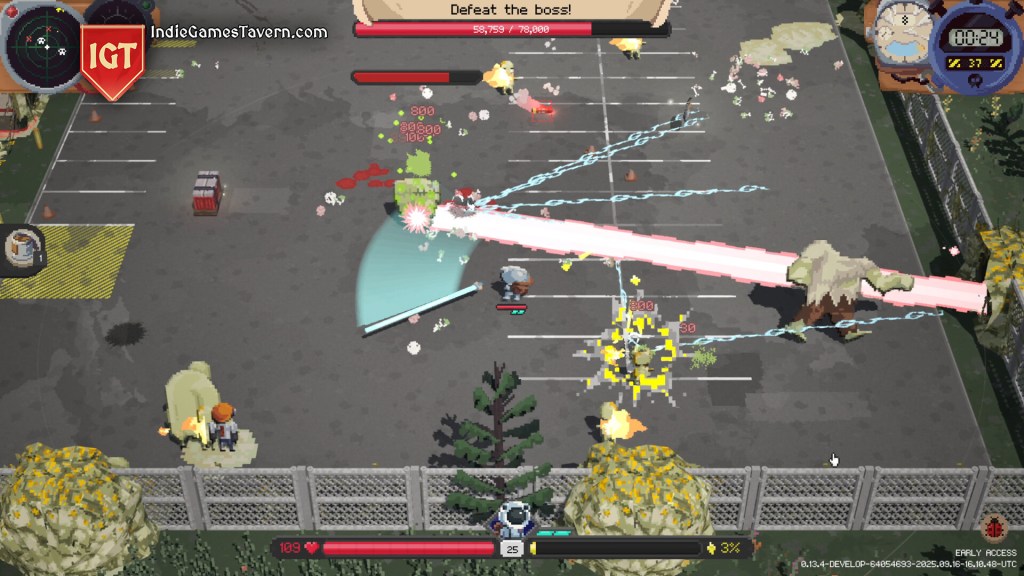
In a crowded sea of zombie roguelites, Deadly Days: Roadtrip arrives as a bold hybrid: bullet-heaven meets inventory tetris meets roadtrip survival. Developed by Pixelsplit and currently in Early Access on Steam, this indie title blends frantic action, tactical loot management, and procedural branching maps. With over 1,400 positive reviews already, the community’s buzzing—but does the game live up to the hype? In this indie game review, we’ll dig into what works, what’s rough, and whether Deadly Days: Roadtrip has what it takes to be a standout in the indie games roguelite space.
Core Concept & What You Do
At its heart, Deadly Days: Roadtrip is a run-based, zombie-survival looter shooter where you drive a van across a map of nodes. At each stop, you disembark, enter procedurally generated zones, battle waves of zombies, scavenge loot, and try to find gas so you can keep going.
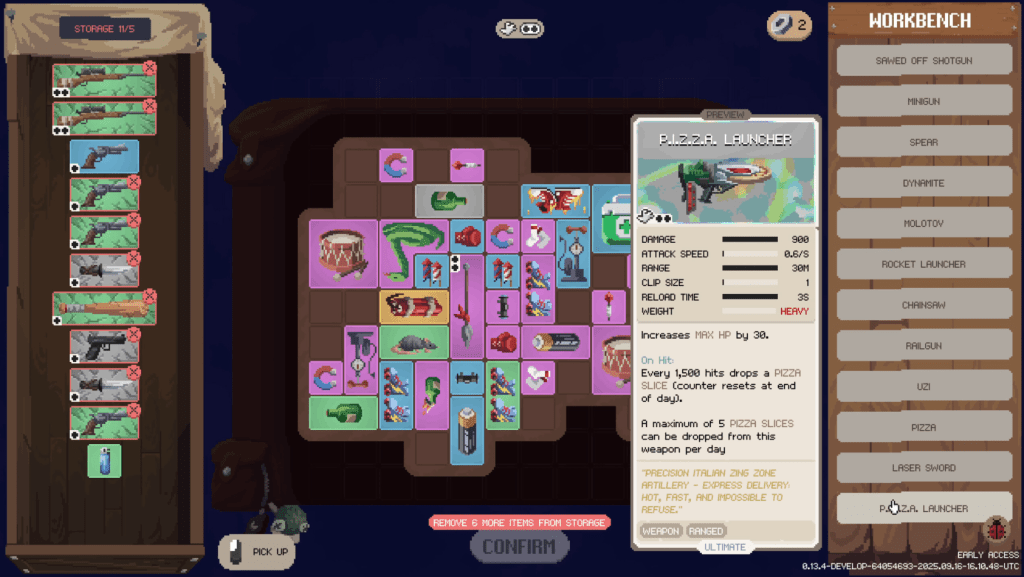
What leavens the formula is a limited inventory: each weapon or item consumes space in your backpack in block shapes (like old-school puzzle packing). You also get adjacency bonuses if items are placed cleverly. Each decision—where to go, how much time to spend looting, what items to discard or combine—is fraught with tradeoffs and risk.
Runs end when your health drops to zero or when you extract (if you have enough fuel). In true roguelite fashion, meta-progress (base upgrades, unlocking new survivors, better gear) carries over between runs.
What Works (Strengths)
1. Satisfying Hybrid of Action + Strategy
Deadly Days: Roadtrip does more than just spray bullets. You’ll be juggling positioning, weapon synergies, backpack Tetris, and deciding: “Do I risk one more room for loot or retreat and live to fight another day?” That tension is the game’s strongest pulse.
2. Inventory Puzzle Mechanics
The block-shape packing element is a rare feature in roguelites. It forces you to weigh each loot drop not just on stats but on spatial fitting. And adjacency buffs encourage creative layouts. It gives you something to fiddle with even during quiet moments.
3. Branching Map & Risk/Reward Map Choices
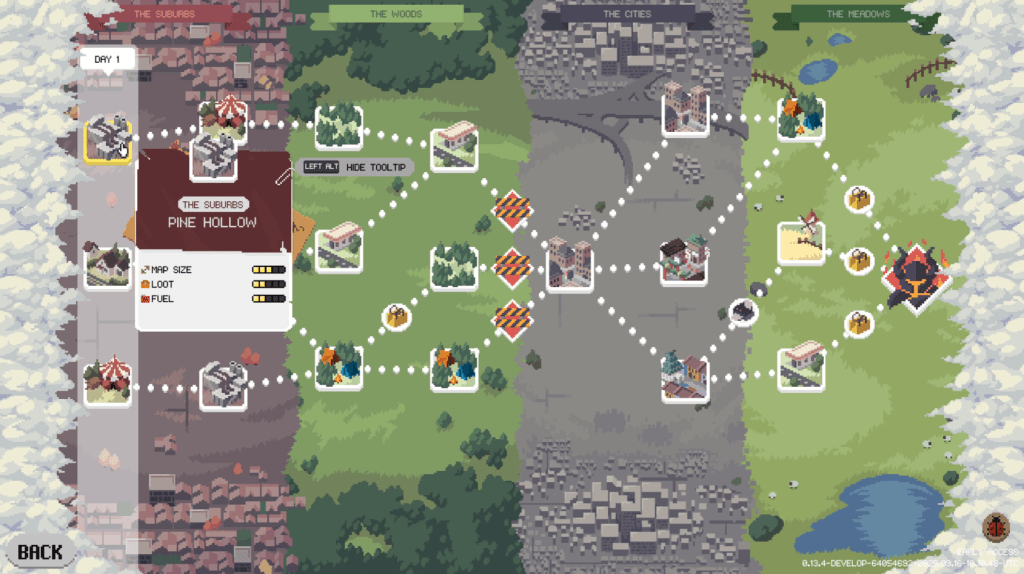
Choosing your next stop isn’t trivial. Bigger zones often yield more loot but more danger. Fuel constraints, loot vs time tradeoffs, and map node decisions make each run feel meaningful.
4. Polished Core Loop (Even in Early Access)
Despite being an Early Access title, Deadly Days: Roadtrip feels well-polished in its core mechanics: combat is snappy, loot drops feel meaningful, zones feel varied. The developers have built a solid foundation.
5. Charm and Visual Style
The pixel / 2.5D aesthetic works well. It’s not trying to wow with high fidelity, but the style is clean, readable, and suits the chaotic gameplay. The mood fits the undead roadtrip vibe. Reviewers note the “cute and playful” look despite the gore.
What Still Needs Work (Weaknesses / Risks)
1. Steep Learning Curve & Weak Onboarding
Some features—especially inventory rules, adjacency bonuses, or how many weapons you can carry—are not always explained clearly. Early runs can feel punishingly opaque. Gamohol’s review particularly points out that the lack of tutorial hampers early progression.
2. Repetition Risk
Because runs share many mechanics, there is a chance that after many playthroughs you’ll see similar zone types, enemy patterns, or loot combinations. In its current state, variety is decent but not infinite. Churape reviews suggest the early stages may feel repetitive if you push many runs.
3. Performance / Platform Bugs
Some users report issues on Steam Deck or performance dips after prolonged play. Steam forums mention visual glitches, lag after ~20 minutes, and occasional black screen or hitching. Also, Churape indicates the game didn’t run properly on deck in their testing.
4. Dependence on RNG & Loot Drops
As with many roguelites, luck plays a strong role. Even a well-played run can be hampered by poor item drops or map node draws. For players who prefer more deterministic progression, this randomness may frustrate.
5. Early Access Content Gaps
Certain features, maps, boss variety, and late-game depth are still being developed. The devs intend to add more playable characters, bosses, maps, and polish. Some of the current content feels like scaffolding to what the full version may become.
Systems & Feature Deep Dive
Combat & Enemy Behavior
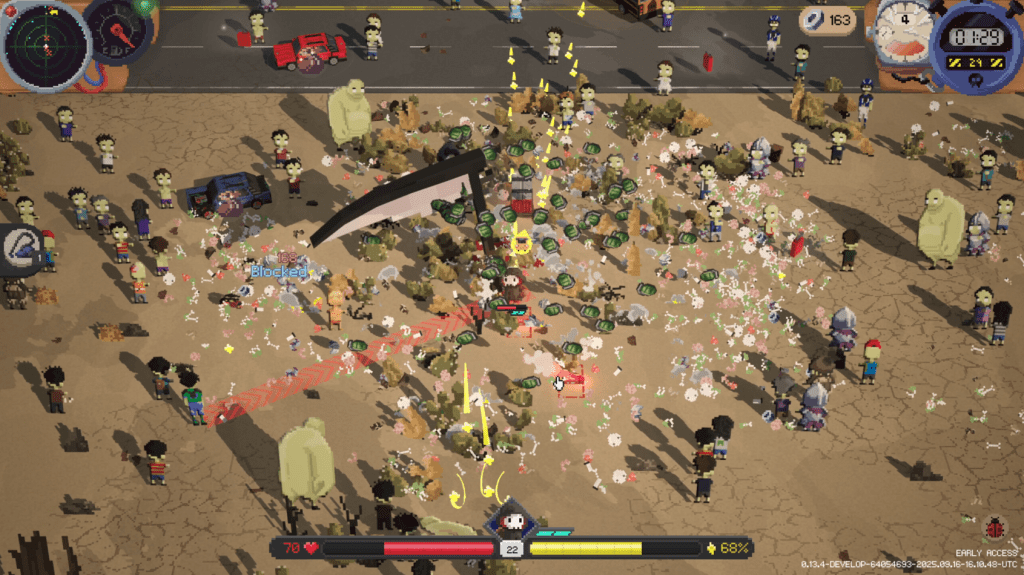
Combat is frenetic. Zombies swarm; special types (bombers, spitters, etc.) appear to introduce chaos and force you to adapt. You’ll dodge, retreat, prioritize threats, and use weapon swaps deftly. The longer you linger, the more zombies spawn—so timing matters.
Loot, Crafting, & Inventory Management
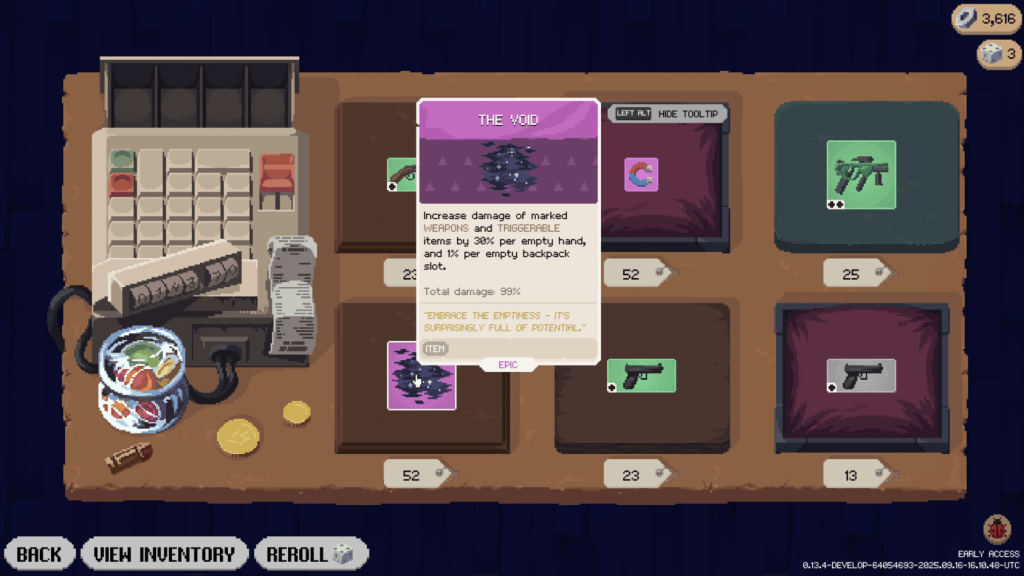
Loot drops from zombies or loot containers include weapons, items, upgrades, and backpack expansions. You often must choose whether to pick an item that gives better stats or one that fits better in your layout. Item recombination / crafting (merging or upgrading) also features.
Map & Route Navigation
Between zones you traverse a “map” with nodes, much like Slay the Spire. Each node has attributes: loot density, distance (fuel cost), danger, and time cost. Deciding your route is a core strategic layer.
Meta Progression
Even upon death, you gain resources to unlock new survivors, base upgrades, or starting bonuses. This allows you to push further later. Unlocks include higher capacity backpacks, better starter gear, etc.
Final Verdict
Deadly Days: Roadtrip is an excellent early contender in the indie roguelite space. It fuses high-energy action with meaningful inventory and routing strategy, offering tension, reward, and replayability. While there are areas that need polish—especially onboarding, repetition mitigation, and performance—it’s already compelling enough that fans of roguelites, looter shooters, or zombie survival should keep an eye on it.
If you like indie games that challenge both reflex and brain, this is one to wishlist or get early access for.
Deadly Days: Roadtrip Review by Indie Games Tavern.
Your cozy corner of indie gems. We’re more than just a indie game review channel, we’re a sanctuary for the unsung heroes of indie gamedev. Born from a love of the underdog, the quirky, and the downright brilliant, the Indie Games Tavern is your trusty guildhall for discovering the finest indie games—those hidden gems, wild experiments, and heartfelt labors that big studios often overlook. Picture this: a weathered oak table laden with scrolls—each a indie game review penned by your tavern scribes, folks like me who’ve braved the pixelated wilds to bring you tales of triumph, terror, and everything in between.
 Indie Games Tavern
Leave a comment