

In the indie strategy arena, few titles deliver the feeling of isolation, risk, and tactical planning quite like Dark Moon. Developed by a small team with a bold vision Jujubee S.A., this game puts players on a moon-base in low orbit, scrambling to build, mine, defend, and expand while facing threats from the environment and emerging factions. With its atmospheric setting, strategic pacing, and emergent mechanics, Dark Moon becomes a standout in the “space-frontier” sub-genre of indie games.
In this review we’ll delve into what Dark Moon does well, what holds it back, and whether it’s a must-play for fans of strategic indie games.
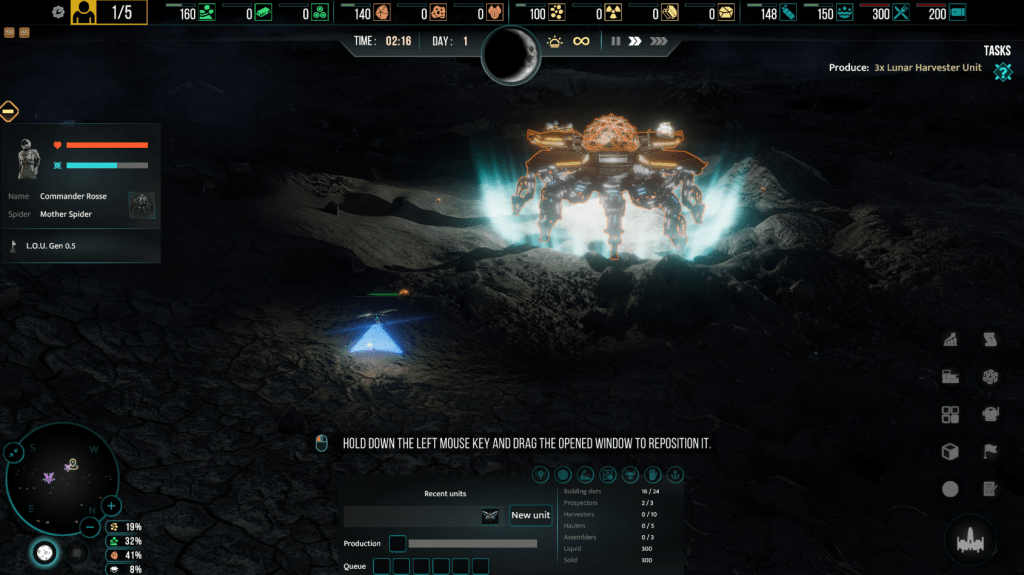
Core Concept & Gameplay Loop
At its core, Dark Moon places you in command of a lunar outpost during a time of shifting opportunity and peril. You will:
- Expand your base across lunar terrain, constructing mining modules, power stations, habitat domes, and defense systems.
- Manage resources such as moon-regolith, helium-3, energy, and build upkeep, while coping with environmental hazards like micrometeorites, solar flares, and limited life-support.
- Defend against opportunistic factions and internal crises—not every threat comes from outside.
- Research new technology, upgrade your base, and push into new sectors of the moon’s surface.
- Balance risk and reward: expanding fast might gain more resources, but you also expose yourself to threats and resource strain.
The loop is strategic and thoughtful—a rhythm of build → mine/expand → defend or overcome crisis → repeat with higher stakes. While not ultra-fast, the pacing gives the player room to breathe, plan, and feel the weight of decisions.
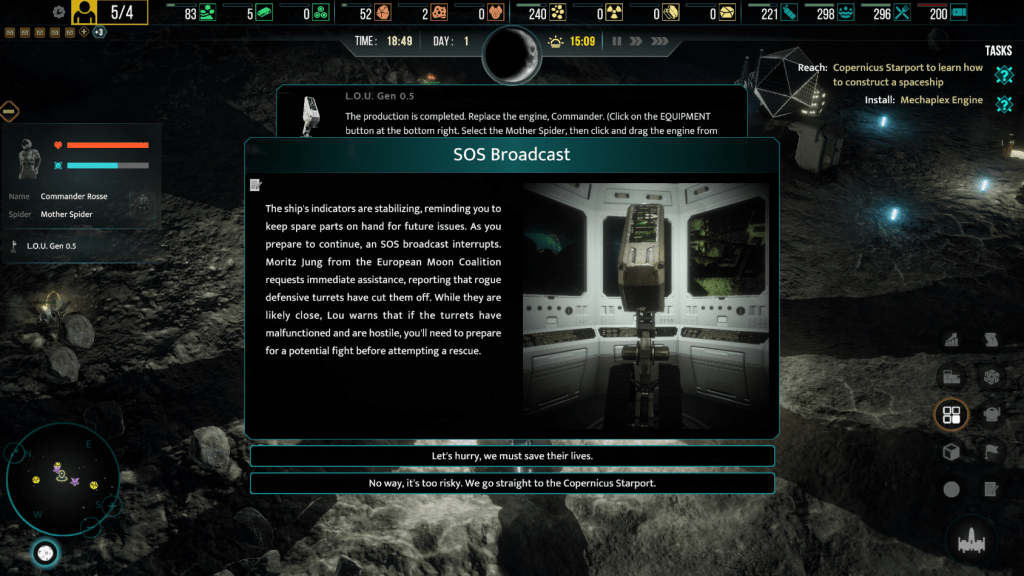
What Works Very Well
1. Atmosphere & Setting
The lunar environment is rendered with enough detail and ambience to make each session feel immersive. The sense of being on the edge of nothingness—the moon’s quiet, the backdrop of space, the fragility of your base—is conveyed well. That kind of setting lifts it beyond a typical “build-and-defend” strategy game into a mood piece.
2. Strategic Depth & Risk Management
Dark Moon rewards thoughtful play. Every expansion decision has consequences: build too far, and logistics or defense become unwieldy; neglect expansion, and you fall behind economically. This tension is the heart of the game’s strength. It accomplishes a balance between growth and survival rather than just “build bigger and more”.
3. Resource & Environmental Systems
The inclusion of environmental hazard mechanics (solar storms, vacuum breaches, micrometeors) gives the game texture beyond pure opponent conflict. These systems integrate well with resource management, making you ask not just “how do I build faster?” but “how do I build smarter?” in a harsh lunar environment.
4. Indie Value & Execution
For an indie game, Dark Moon punches above its weight. While it may not have AAA polish or huge budget spectacle, it has clear vision, solid systems, and deliverable content that makes it compelling. For strategy fans looking for something fresh outside the big-budget titles, this is a strong contender.
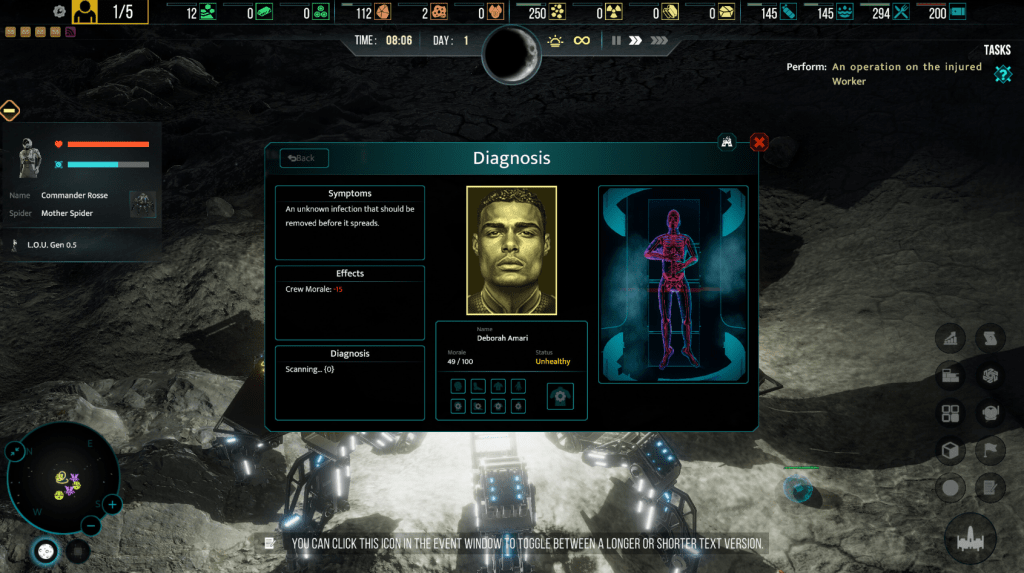
Areas for Improvement & Considerations
1. Learning Curve & UI Clarity
While the systems are deep, the game sometimes underserves players in terms of onboarding. Some resource flows, hazard feedback, or expansion penalties aren’t always clearly explained. Newcomers to base-building/planetary strategy games might feel a bit lost early on.
2. Content Depth & Variety
Although the core loop is strong, over many hours some patterns begin to repeat. The base layouts and hazard types are well-designed, but might benefit from more variety—different moon‐regions, more faction types, randomized event chains—to maintain long-term freshness.
3. Defensive & Opponent Systems
While environmental risks are well executed, the opponent/faction threat side could feel less dynamic. Some players might find that “defend against wave” moments feel less interesting compared to build and exploration phases. A stronger adversary system or emergent threat mechanic might enhance tension further.
4. Performance & Polish
As with many indie strategy games, performance on lower-end hardware or large base layouts can show strain—slower frame rates, smaller UI elements, lag in later phases. The developer has acknowledged optimization is a work in progress.

Deeper Systems & Features
- Expansion vs Logistics: As your base grows, you’ll need transport systems, power distribution, and supply lines. The farther you push, the more vulnerable you are.
- Research & Tech Tree: There’s a meaningful tech progression: better mining modules, automated defense turrets, advanced life‐support systems. These unlock new strategies rather than just incremental boosts.
- Hazard Events: Random and scheduled events (solar flare, vacuum leak, meteor swarm) impose temporary crises that test your resilience and infrastructure design.
- Base Design Freedom: You aren’t locked into templated layouts. Where you place modules matters for defense and logistics. Terrain features (crater ridges, lava tubes, vantage points) are integrated into strategy.
- Risk/Reward Mechanics: Going for deeper moon‐regolith deposits can give huge return but may be located in more exposed terrain, forcing you to make decisions about investing in defense vs economy.
Final Verdict
Dark Moon is a well-crafted indie strategy game that combines base-building, resource management, environmental hazard simulation, and strategic expansion in a lunar setting. It doesn’t reinvent the genre dramatically, but it refines and contextualises these mechanics well into a cohesive experience that fans of indie strategy games should not miss.
If you enjoy indie games with thoughtful systems, atmosphere, and strategy rather than reflex-based action, Dark Moon is highly recommended. While it could benefit from more variety and polish as it evolves, what’s here already delivers strong value.
Who Should Play It?
- Strategy fans who enjoy base‐building, logistics, and environmental simulation.
- Players who like slower, thoughtful gameplay rather than fast-paced action.
- Gamers looking for strong indie offerings in the strategy space.
Who Might Be Frustrated?
- Players seeking immediate, flashy action or minimal management.
- Those wanting fully polished large-scale content or extreme adversarial variety right away.
- Gamers who prefer very robust tutorial/onboarding systems for complex strategy titles.
Dark Moon Review by Indie Games Tavern.
Your cozy corner of indie gems. We’re more than just a indie game review channel, we’re a sanctuary for the unsung heroes of indie gamedev. Born from a love of the underdog, the quirky, and the downright brilliant, the Indie Games Tavern is your trusty guildhall for discovering the finest indie games—those hidden gems, wild experiments, and heartfelt labors that big studios often overlook. Picture this: a weathered oak table laden with scrolls—each a indie game review penned by your tavern scribes, folks like me who’ve braved the pixelated wilds to bring you tales of triumph, terror, and everything in between.
 Indie Games Tavern
Leave a comment