
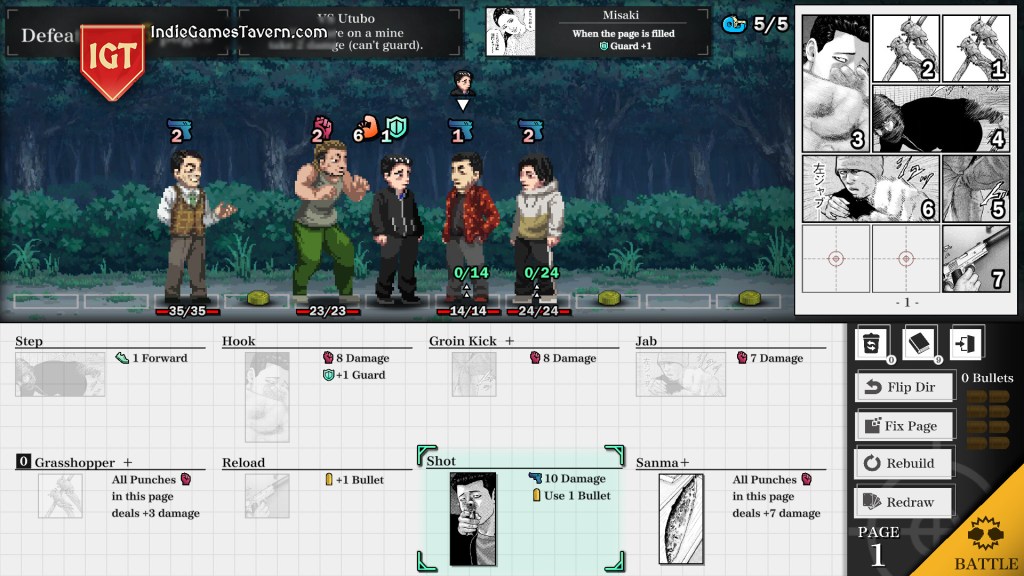
If you’ve ever wondered what happens when a hit manga series collides with roguelike deck-building and puzzle mechanics, then The Fable: Manga Build Roguelike is your answer. Developed by indie gamedev MONO ENTERTAINMENT and published by Kodansha, this indie title drops on Steam and Nintendo Switch on 5 November 2025.
This indie roguelike takes the wildly popular manga The Fable (over 28 million copies sold) and re-imagines its story by turning manga-panels into the core mechanic of combat. In other words: you don’t just read the manga—you build it, one panel at a time, to spark action in battle.
In this indie game review, we’ll explore how this concept works in practice, what shines, where the game might stumble, and whether it’s worth your wishlist.
Core Concept & Gameplay Loop
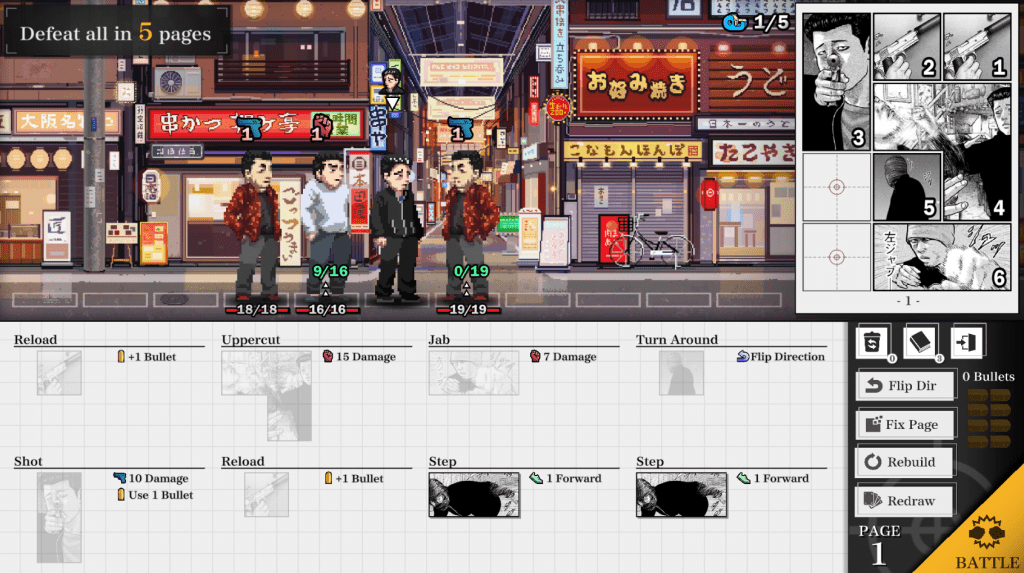
At its heart, The Fable: Manga Build Roguelike is a roguelike deck-builder with a heavy twist: every battle is framed like a manga page. But instead of cards being spells or attacks, your “cards” are manga panels—pieces of the story format you place on a page-grid, which then execute in sequence as you fight.
Here’s how the loop works:
- Panel-collection & deck building: You acquire panels (Attack, Move, Defence, etc.) each turn. These are your “cards.”
- Page layout mechanic: You place these panels on a blank manga page, in panel-order (top-left to right, downwards) and positioning matters. Holes (damage zones) prevent panel placement.
- Battle execution: Once placed, panels trigger in order, executing your moves, attacks or defenses. You must adapt to enemy positioning and the page’s layout constraints.
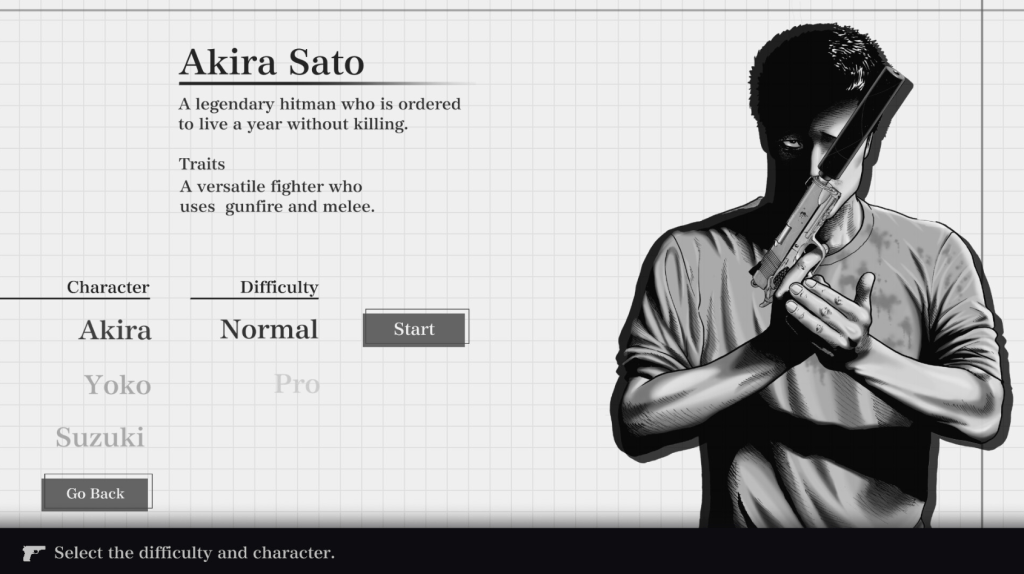
- Character variation: You can play as one of three characters, each with distinct styles:
- Akira: a genius hitman combining gunfire and melee.
- Yoko: mobile specialist who out-moves foes.
- Suzuki: trap-and-bullet assassin.
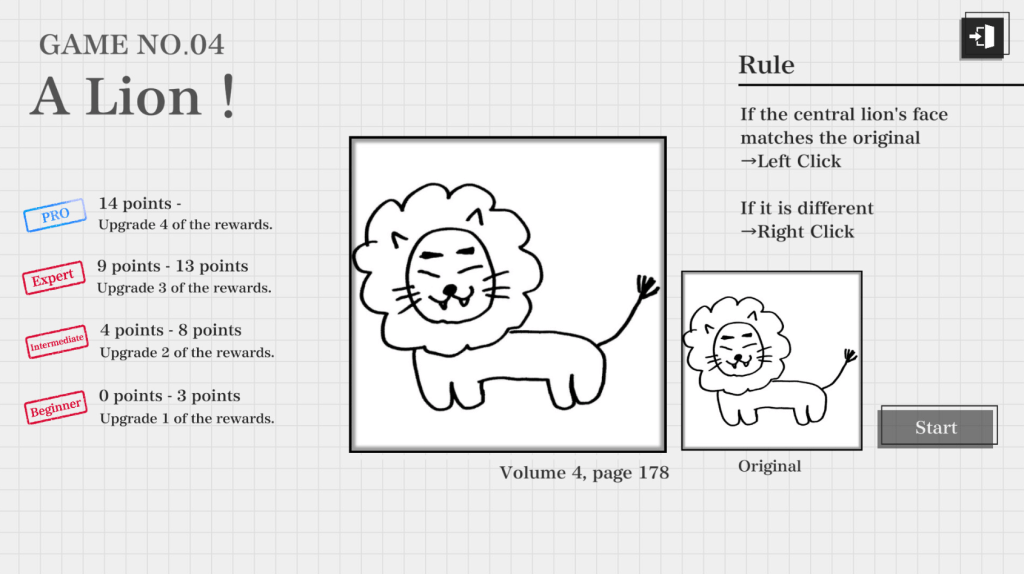
- Mini-games & puzzle mode: Between runs there are mini-game interludes (e.g., drinking contests) and a dedicated Puzzle Mode where you must beat all enemies in a single page without turning it.
So the full loop: Pick character → enter battle → build page with panel-cards → execute turn → adapt rules and damage holes → earn new panels and progress → repeat deeper.

What Works Well
1. Fresh Mechanics & Visual Identity
Turning manga panels into playable cards is clever. Rather than a generic “card = skill” system, this gives thematic weight and visual context. The page-grid mechanic introduces spatial strategy rarely seen in deck-builders. Reviewers highlight it as:
“You place panels based on scenes from the manga on a page to create your own manga for each battle.”
2. Accessible Yet Strategic
The puzzle-deck-roguelike hybrid allows both casual tactics and deeper mastery. The demo reportedly clocked ~60 mins for a playthrough but with “Very Positive” feedback. It offers short run-friendly structure yet enough room for build optimization.
3. Character Diversity & Style
Each character—Akira, Yoko, Suzuki—brings distinct tactics (melee/gun hybrid, mobility focus, trap & bullet specialist). This provides ways to tailor your experience and build around each’s strengths.
4. Strong Presentation for Indie Game
Pixel-art style, manga aesthetic, mini-games between battles—all of this adds polish and personality for an indie-studio title. The language support (English, Japanese, Simplified Chinese) is also a plus.
Areas for Improvement & Things to Watch
1. Replay Depth & Variety
The core concept is strong, but many deckbuilders/puzzle hybrids suffer if core content variety is limited. Will there be sufficiently diverse panels, enemy patterns, page layouts to sustain many runs? If not, it may slide into repetition.
2. Depth vs Randomness Balance
Panel draws are random. While randomness is built into roguelikes, if panel-pool control is weak you may feel your strategy is too luck-dependent. The spatial grid mitigates that, but long-term build freedom will matter.
3. UI/Onboarding Complexity
Because the game layers deck-building + spatial puzzle + character tactics, clarity in early runs and tutorialization will be key. If players feel lost about panel placement rules or “page holes,” initial frustration may deter them.
4. Polishing & Content Scope at Launch
Given its release date (5 Nov 2025) and demo state, we should check for polish: bugs, balancing, load-times, UI clarity. Also, how many runs, challenge modes, difficulty tiers will be available at launch? The demo offered limited content (~60 minutes) so full release must deliver more.
Final Thoughts
The Fable: Manga Build Roguelike is one of the more interesting indie games coming from the deckbuilder/roguelike space in recent times. Its mechanics are novel, its visuals appealing, its theme strong—especially if you’re a fan of the manga or enjoy strategic hybrids.
If you appreciate indie games that experiment with form and blend narrative style (manga) with strategy, this game is very likely worth your wishlist.
To us at Indie Games Tavern, if you still concern about this indie game, we suggest that you should download the demo (released Oct 9) to test panel placement and character feel, and then keep an eye on the full launch on Nov 5.
Who Should Play It?
- Fans of the manga The Fable, who want a game tied to the franchise.
- Players who enjoy roguelike deck-builders with extra spatial/puzzle layers.
- Strategy gamers looking for shorter, bite-sized runs with build variation and re-play hooks.
Who Might Wait or Skip?
- Players seeking deep open-world action or real-time combat rather than turn-based/tactical.
- Gamers who dislike randomness-heavy builds or are wary of early-release balance issues.
- Those who prefer long campaigns with narrative depth over run-loop focused experiences.
The Fable: Manga Build Roguelike Review by Indie Games Tavern.
Your cozy corner of indie gems. We’re more than just a indie game review channel, we’re a sanctuary for the unsung heroes of indie gamedev. Born from a love of the underdog, the quirky, and the downright brilliant, the Indie Games Tavern is your trusty guildhall for discovering the finest indie games—those hidden gems, wild experiments, and heartfelt labors that big studios often overlook. Picture this: a weathered oak table laden with scrolls—each a indie game review penned by your tavern scribes, folks like me who’ve braved the pixelated wilds to bring you tales of triumph, terror, and everything in between.
 Indie Games Tavern
Leave a comment