
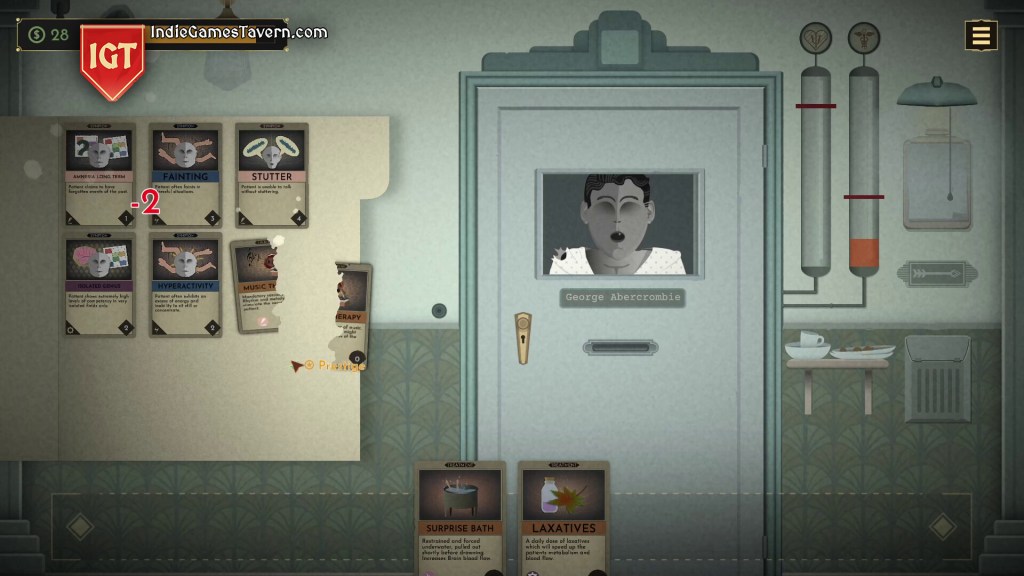
Set in the year 1923, Sanatorium – A Mental Asylum Simulator from indie studio Zeitglas (published by Shoreline Games) delivers a card-driven simulation experience that places you inside the unsettling halls of Castle Woods Sanatorium—a historic-fiction asylum where the lines between care and cruelty blur. You play a journalist posing as a doctor, diagnosing and treating patients with period-appropriate tests and treatments, all while pursuing a deeper mystery.
This medical sim indie game is firmly in the realm of indie games with narrative depth and conceptual bite—a blend of simulation, management, and mystery. Let’s dig into how it holds up in practice.
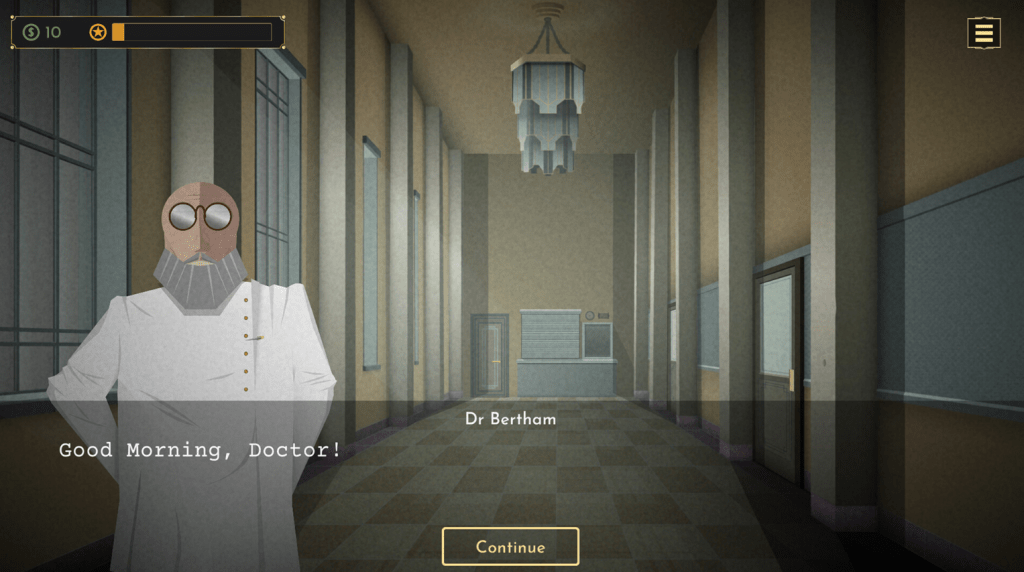
Gameplay & Core Mechanics
At its heart, Sanatorium is a simulation of medical diagnosis and patient care, wrapped in a narrative mystery:
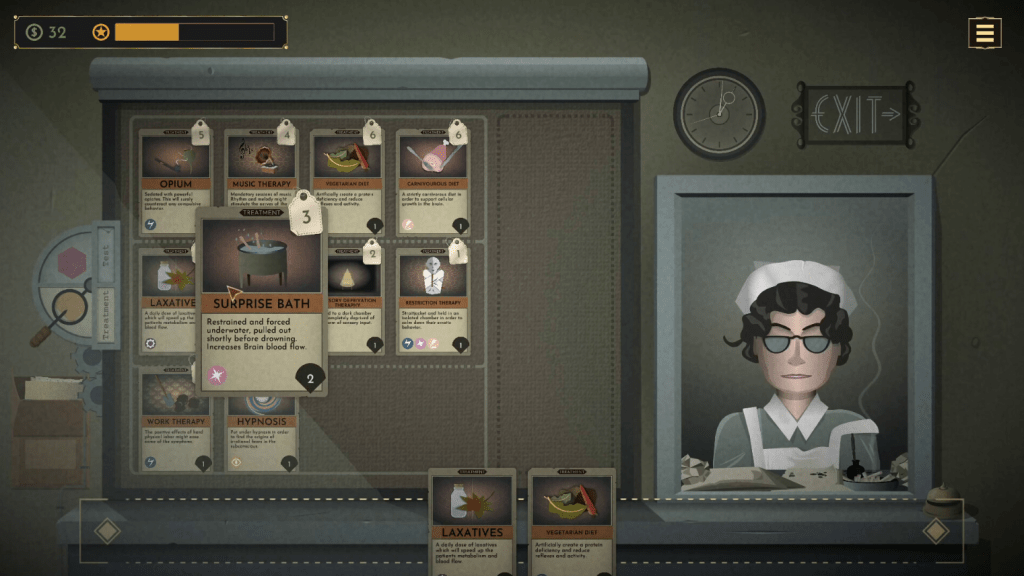
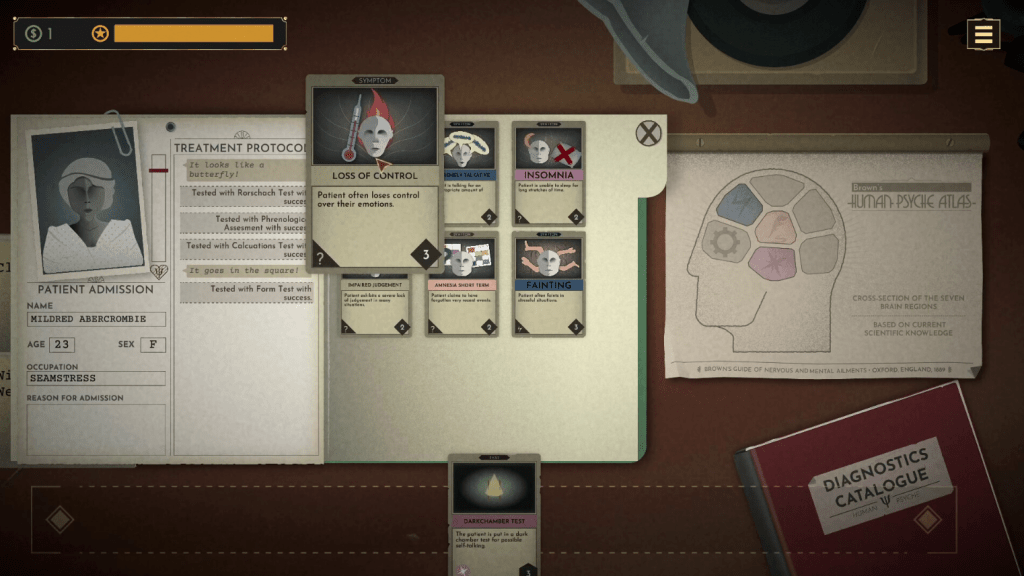
- Each “day” you board-up your patients using cards: Test cards to reveal hidden symptoms, and Treatment cards to act. Cards represent historical (often disturbing) psychiatric methods plus bogus practices from the era.
- You must decide to follow “standard” treatments or experiment. The game emphasises moral tension: acts labelled as care may still feel cruel by modern standards. The store page warns of self-harm, drug use and violence depicted as historical critique.
- Patient files are puzzles: disposition, symptoms hidden, catalyst symptoms uncovered via tests, then treatments selected, all under time or scrutiny pressure. AltChar’s review says: “Each patient is a puzzle – files unfold as layered card sets, with symptoms hidden…”
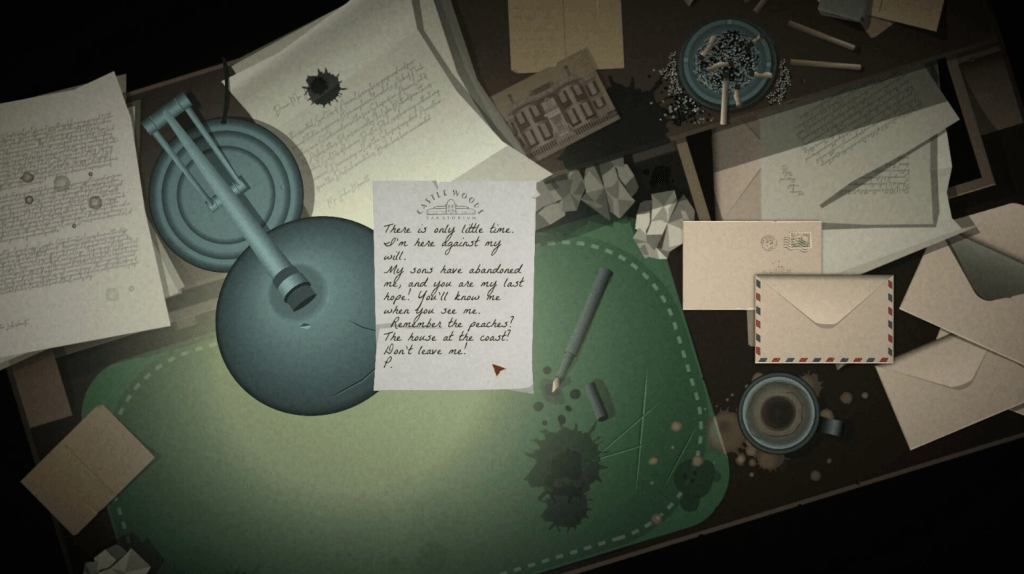
- Outside patient care you explore the asylum at night, uncover secrets of the institution and your own past—thus the simulation is underpinned by story.
- The game features 4 chapters, multiple endings, and branching paths based on your moral/treatment choices.
So the loop: review patient file → test/diagnose via cards → apply treatment → get results/feedback and consequences → investigate asylum → repeat/advance chapters. The simulation mechanics tie into narrative consequences.
What Works Well
1. Unique Concept & Setting
Very few games tackle early-20th-century psychiatry with this depth. The amalgam of historical practices, pseudo-science, moral ambiguity, and mystery gives the game an identity. DualShockers praised the “dear patient stories” and the Art Deco style of the setting. During the time that many studios try to clone games, this indie gamedev Zeitglas really did a great work, and they did have the admiration from us at Indie Games Tavern.
2. Card-Driven Patient Mechanics
The card system is clever: test cards reveal symptoms, treatment cards act upon them, and the gameplay involves managing hidden information and risk. AltChar says it “makes paperwork engaging”.
3. Atmosphere & Narrative Tone
The 1920s sanatorium setting, combined with a noir/mystery narrative, gives the game weight. The writing—patients, staff, your disguise as an impostor—adds intrigue. The Escapist notes that the moral decisions don’t offer simple good/bad outcomes.
4. Indie Value & Thought-Provoking Themes
For fans of indie games that explore uncomfortable territory, Sanatorium offers more than “just gaming”—it invites reflection on ethics of care, treatment, and power in medicine. The small-team origin (Swiss indie studio) gives it authentic indie spirit.
Areas for Improvement & Things to Be Aware Of
1. Quality-of-Life & Technical Issues
Several reviews mention UI quirks and bugs. AltChar’s review:
“Menus have a tendency to act a bit strange, sometimes resulting in a soft-lock or simply not responding…”
These issues affect flow and may frustrate players.
2. Depth vs Replayability Concern
While the core mechanics are strong, some feedback notes that once you’re used to the systems the challenge/novelty may drop. For example AltChar again:
“The economy balance breaks down… early tension disappears.”
The simulation may need more variation or content to sustain long-term play.
3. Accessibility & Learning Curve
Players unfamiliar with simulation/card-management games may feel overwhelmed with symptom tracking, hidden states, treatment consequences. The complexity and moral weight require patience.
4. Sensitivity of Theme
The game deals with outdated psychiatric practices, self-harm, drug addiction, etc. While these are framed as critique, they may be sensitive content for some players. The store page emphasises this.
Final Thoughts
Sanatorium – A Mental Asylum Simulator stands out in the indie games landscape as a thoughtful, atmospheric simulation with narrative tension and card-based mechanics. It may not be for everyone—especially those seeking light or entertainment-only gameplay—but for players who appreciate story-rich, morally nuanced indie games, it’s highly recommended (with caveats about polish).
To us at Indie Games Tavern, if you’re prepared to step through the gates of Castle Woods Sanatorium and assume the role of a false doctor in a world where every diagnosis is a risk, Sanatorium – A Mental Asylum Simulator may pull you into a dark, reflective journey about care, treatment, and what it means to help—or to harm. This really is a good product from the indie game dev Zeitglas.
Who Should Play It?
- Players who enjoy simulation/management games with narrative and moral complexity.
- Fans of indie games that offer something unconventional and reflective.
- Gamers comfortable with slower, thoughtful pacing rather than fast action.
Who Might Wait or Skip?
- Players seeking highly polished, bug-free launch experiences (some issues remain).
- Gamers who prefer action-heavy gameplay or very large sandbox depth rather than structured simulation loops.
- Anyone sensitive to mental-health themes and historical medical practices.
Sanatorium Review by Indie Games Tavern.
Your cozy corner of indie gems. We’re more than just a indie game review channel, we’re a sanctuary for the unsung heroes of indie gamedev. Born from a love of the underdog, the quirky, and the downright brilliant, the Indie Games Tavern is your trusty guildhall for discovering the finest indie games—those hidden gems, wild experiments, and heartfelt labors that big studios often overlook. Picture this: a weathered oak table laden with scrolls—each a indie game review penned by your tavern scribes, folks like me who’ve braved the pixelated wilds to bring you tales of triumph, terror, and everything in between.
 Indie Games Tavern
Leave a comment