
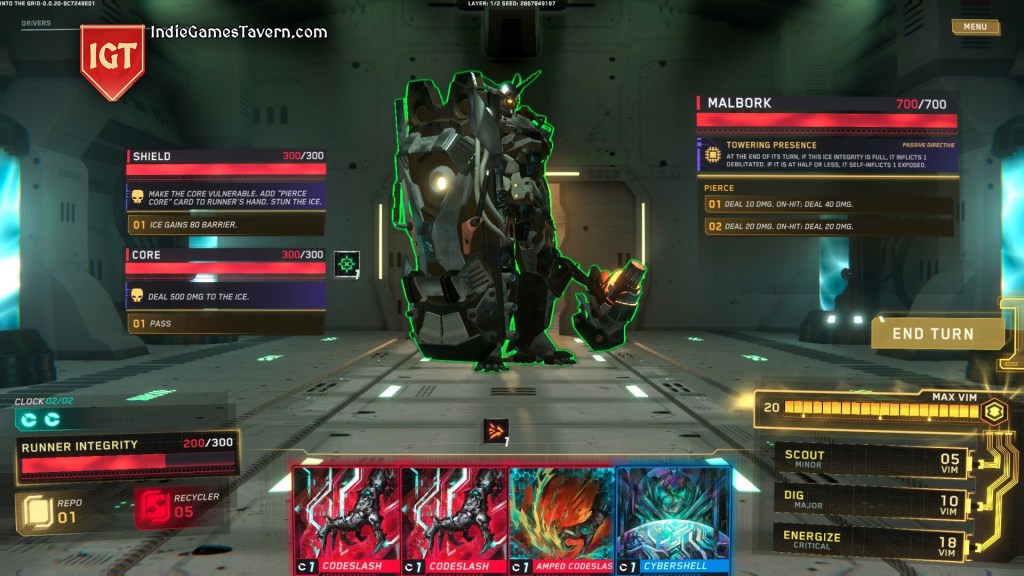
From the indie gamedev team at Flatline Studios comes Into The Grid, a cyberpunk-flavoured roguelite deck-builder and dungeon-crawler hybrid set to launch on Steam Early Access on 11 November 2025.
In a genre crowded with “build your deck → climb → repeat” titles, Into The Grid attempts to offer something more tactical: map exploration, dual-resource mechanics, hacker-themed card play, and a rich cyberpunk narrative.
Let’s follow us at Indie Games Tavern to dive in this indie game review, we’ll dig into what works, where it needs work (especially given its early access status) and whether this is a must-wish-list for fans of indie games, deck-builders and roguelikes.
Core Concept & Gameplay Loop
At its core Into The Grid combines three big pillars:
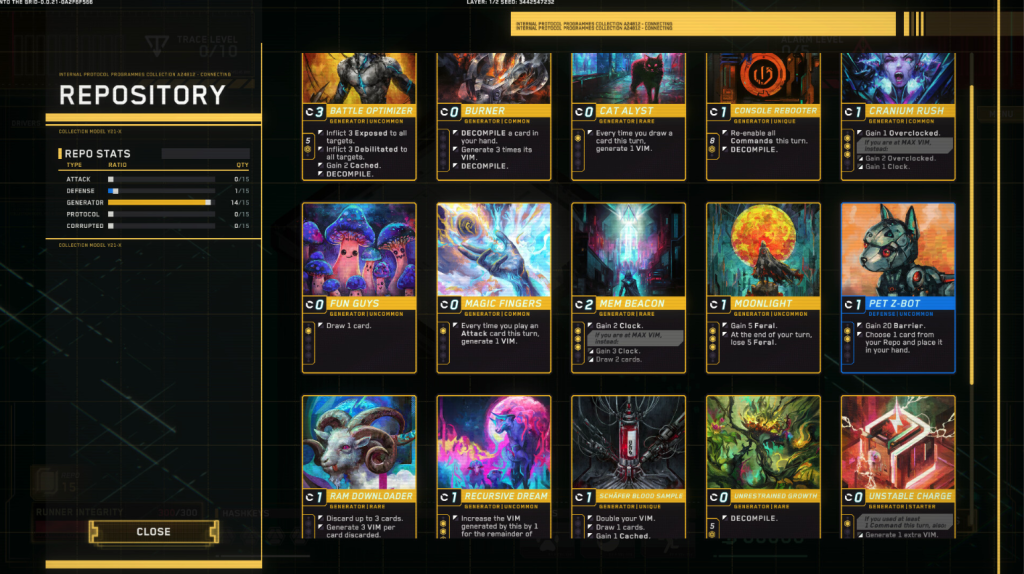
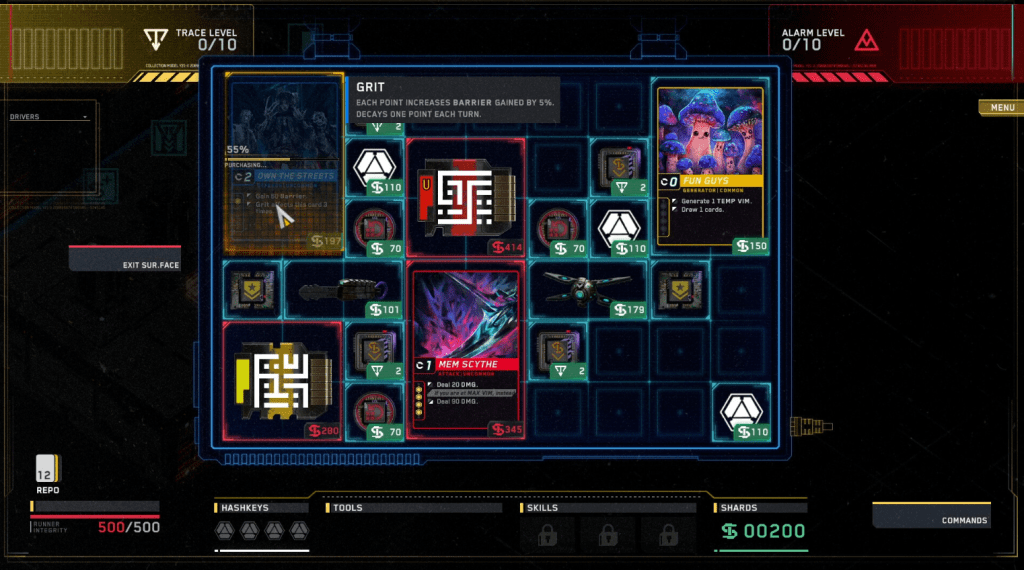
- Deck-building combat: You acquire “Program” cards (your attacks, hacks, utilities) and play them in battle against corporate security, rogue AIs and digital defenders.
- Dual-resource “Command” system: Unique to this title, it uses a resource called VIM (Virtual Memory) that each card generates when played, which you spend on “Commands”—powerful effects that mitigate bad hands and reduce randomness.
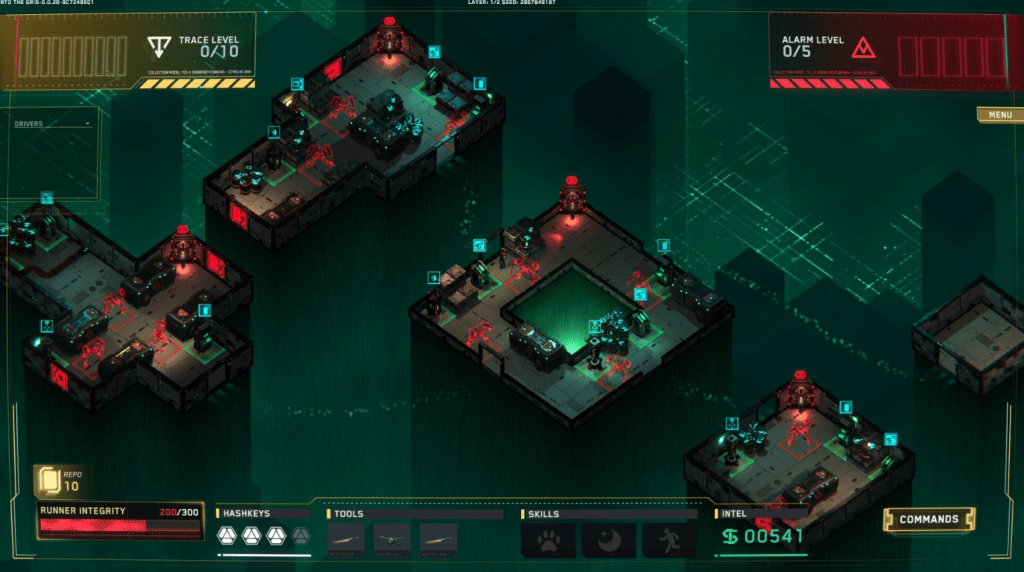
- Map exploration / dungeon crawler hybrid: Rather than purely card battles, you navigate procedurally generated “grids” (cyberspace nodes) with branching paths, risk-reward decisions, resource management, and one shot at reaching the core of the corporation’s system.
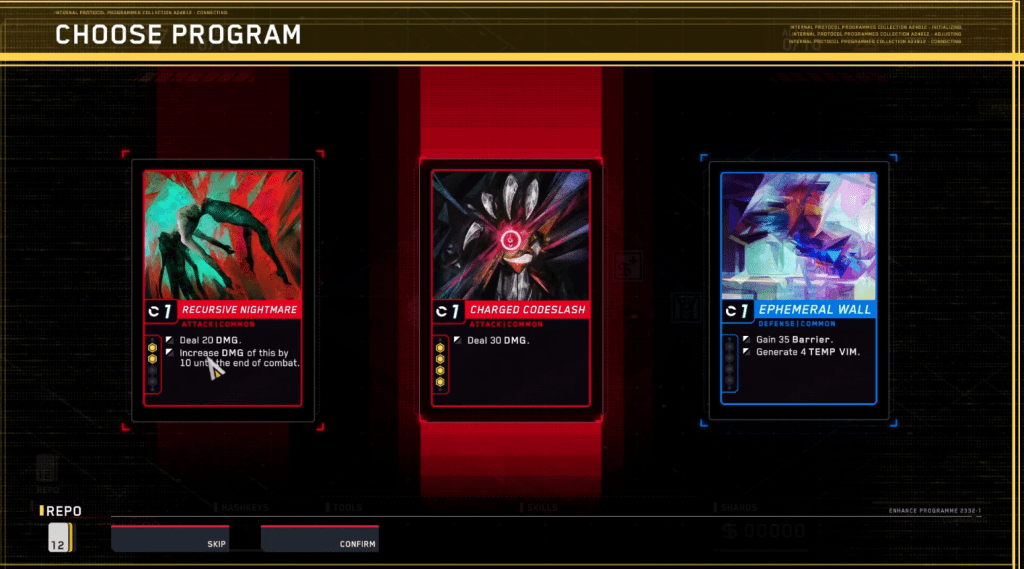
So the gameplay loop of this indie game becomes: choose a hacker character → enter the grid node-map → pick routes, face events/enemies, acquire new cards/commands → engage in card battles with your program deck + VIM/command system → win the run or die and start again with meta progression → unlock new cards, upgrades, characters.
It’s a formula familiar to fans of Slay the Spire and other roguelite deck-builders—but with enough twists that it feels like its own beast. We Indie Games Tavern highly appreciate this effort from the indie gamedev Flatline Studios.
What Works Strongly
1. Tactical Depth & Choice
The dual-resource system (cards generate VIM which powers Commands) is smart. It gives you a way to mitigate “bad cards” and adds layer of tactical planning: you might build for VIM-generation or build to play large cards directly. That kind of choice elevates the deck-building beyond “which attack is strongest”.
2. Setting & Aesthetic
The cyberpunk hacker theme—navigating grids, fighting corp security, using hacking cards—fits the mechanics well. Early demos and community feedback highlight the polish:
“It’s a very fun, challenging, original experience to the roguelike deckbuilder genre… Definitely its own experience.”
3. Indie Value & Platform Support
The developers have emphasised cross-platform support: Windows, macOS, Linux (including Steam Deck) for the demo. For an indie title, that’s consistently good value and accessibility.
4. Early Feedback & Community Engagement
The team has been active with demos and playtests, gathered feedback, updated visuals (notably the June 2025 demo overhaul with better VFX, map visuals) which suggests the devs are serious about polish. We Indie Games Tavern really think the indie gamedev Flatline Studios did a great job here.
Areas for Improvement & Risks
1. Early Access / Content Scope
Since the full launch is in Early Access, only two playable characters are available at launch with more to come. This means some content might feel limited initially: fewer characters → fewer synergies → less variety.
2. Replayability & Map Variety
For deck-builders, long-term appeal often depends on “how many different builds, synergies, and routes are there?” Early word shows strong promise, but how deep the map-nodes, enemy variety, card pool and meta are remains to be fully proven.
3. Learning Curve & Onboarding
With map exploration + deck building + dual-resources + cyberpunk narrative, there’s a decent number of systems. Players new to deck-builders or exploration hybrids may need good tutorials. Some comments suggest the demo felt “bursty” until mechanics clicked.
4. Polish & Technical Readiness
Even though demos have been strong, Early Access inherently carries risks: balance issues, UI build-ups, bugs. Some users note Steam Deck UI-text size issues for this game.
Final Thoughts
Into The Grid stands out among indie deck-builders thanks to its tactical innovations (like the VIM/Command system), strong thematic coherence (hacker + cyberpunk + card battles) and platform breadth. If you’re a fan of roguelite deck-builders and willing to engage with Early Access, this is a game worth placing on your wishlist, especially if you want to support the indie gamedev like Flatline Studios.
However, if you wait for full content, or avoid early access risks, keep an eye on its updates—but the foundation is very promising.
To us at Indie Games Tavern, Into The Grid gives you hacking cards, strategic maps, dual-resource systems and an indie polish that combines flavour with depth. If you like your indie games with both brains and style, this one deserves your attention.
Who Should Play It?
- Fans of deck-builders (e.g., Slay the Spire, Monster Train) looking for fresh mechanics and cyberpunk flavour.
- Players who appreciate indie games experimenting with hybrid mechanics (map + cards + dual-resource).
- Gamers who like strategic choice, problem solving and rerun-based systems rather than heavy action.
Who Might Wait or Skip?
- Players preferring fully finished games with maximal content at launch rather than Early Access.
- Of course those who dislike deck-building or exploration hybrids and prefer one genre pure.
- Gamers expecting massive sandbox depth or heavy multiplayer features (this is single-player focussed).
Into The Grid Review by Indie Games Tavern.
Your cozy corner of indie gems. We’re more than just a indie game review channel, we’re a sanctuary for the unsung heroes of indie gamedev. Born from a love of the underdog, the quirky, and the downright brilliant, the Indie Games Tavern is your trusty guildhall for discovering the finest indie games—those hidden gems, wild experiments, and heartfelt labors that big studios often overlook. Picture this: a weathered oak table laden with scrolls—each a indie game review penned by your tavern scribes, folks like me who’ve braved the pixelated wilds to bring you tales of triumph, terror, and everything in between.
 Indie Games Tavern
Leave a comment