
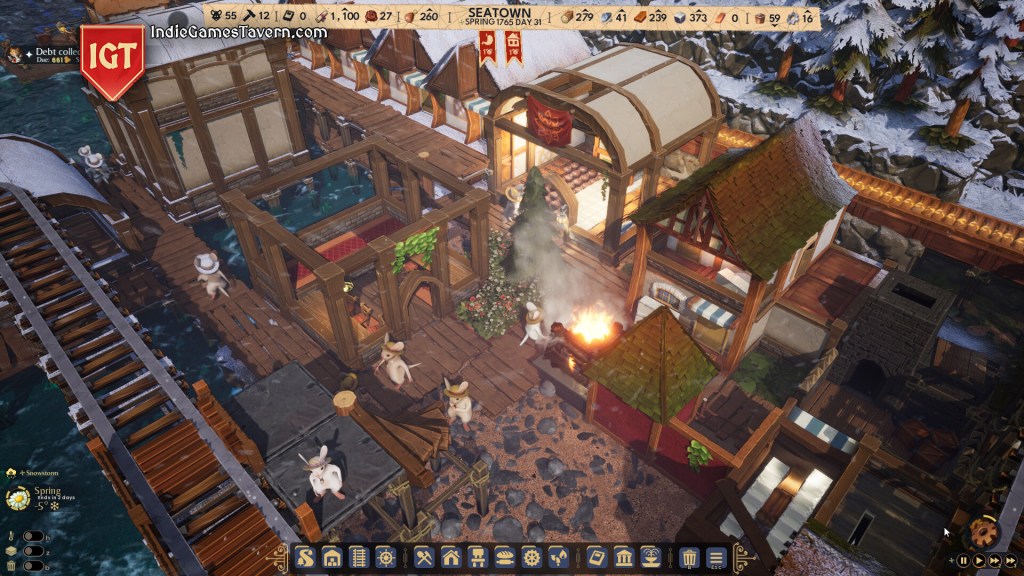
Whiskerwood by the gamedev Minakata Dynamics (published by Hooded Horse) is a city-builder with an adorable-but-cutthroat premise: you lead a colony of industrious mice, building under the “oppressive paw” of their cat overlords. The game officially entered Early Access on Steam in November 2025.
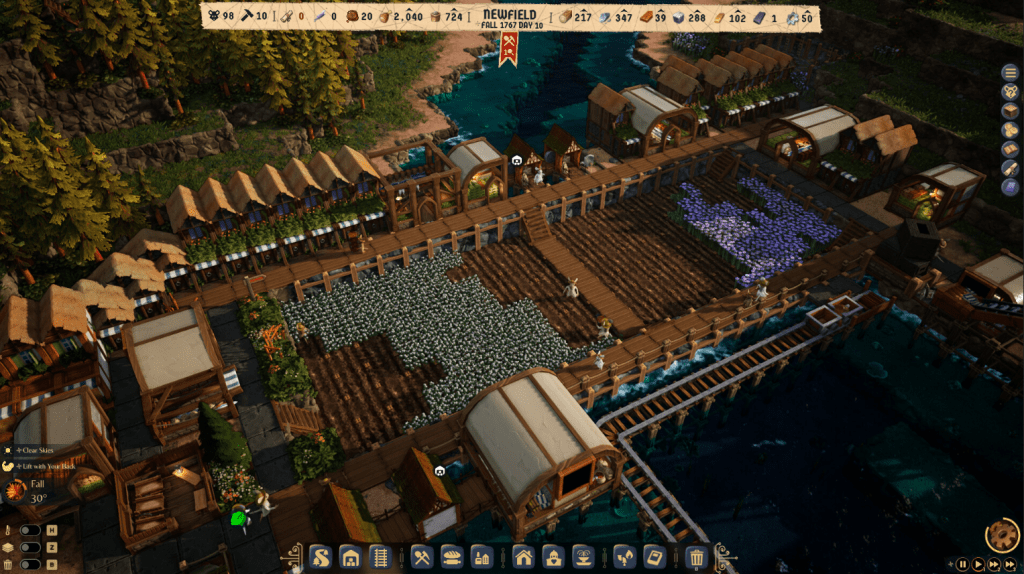
What makes Whiskerwood appealing is how it combines cozy charm (mice, small crafts, tight colony management) with deep simulation: 40+ commodities, vertical construction (burrows plus sky-high mouse architecture), and logistics galore. But as with many early access titles, it comes with trade-offs.
Let’s follow us at Indie Games Tavern to dive in this indie game review, we’ll look at how Whiskerwood performs now, its strengths, its risk areas, and whether it’s worth your time.
Core Gameplay & Loop
At its core, Whiskerwood is a deep colony management sim:
- Founding a Colony: You guide a group of mice that have journeyed to “new lands” by ship, sent by their cat overlords.
- Resource & Production Chains: Build up a supply network for over 40 items: raw resources (wood, ore), processed goods, luxury items.
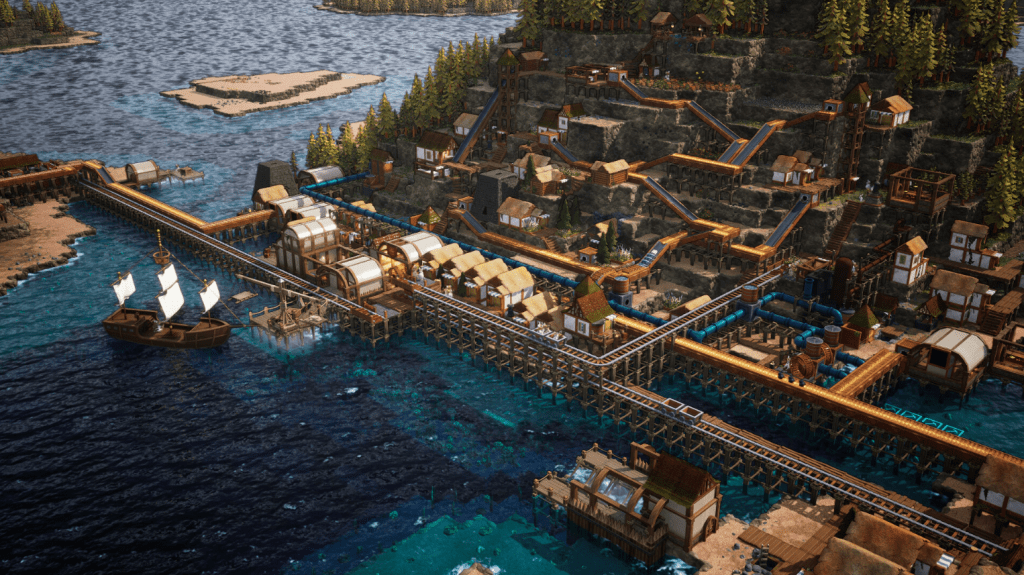
- Vertical Building & Terraforming: Your colony isn’t flat — you can build into mountains, dig tunnels, expand underground, or build upward into the sky.
- Logistics & Infrastructure: Conveyor belts, lifts, water pipelines, and steam-powered climate control are essential if your mouse city is to function efficiently.
- Mouse Management: Your mice (colonists) have unique attributes. Assign them to roles (gathering, industry, crafting) based on their strengths and preferences.
- Diplomacy & Overlord Demands: Your mouse colony must satisfy cat overlords. There’s trade, resource quotas, and political tension — plus possible pirate threats, research, and policy decisions.
- Climate & Survival: Weather matters. Cold fronts, storms, and heating infrastructure make survival and comfort important, not just production.
Let us at Indie Games Tavern summarize, the indie gamedev Minakata Dynamics really build a hooked loop for this indie colony builder: expand colony → gather / produce → fulfill demands → upgrade / automate → defend or push forward → repeat.
What Works Very Well
1. Unique and Charming Setting
The idea of mice building under cat overlords is delightfully whimsical, but has real strategic weight. It’s a clear “cat-and-mouse” conflict, but reimagined in a simulation-strategy context.
2. Deep Simulation with Broad Scope
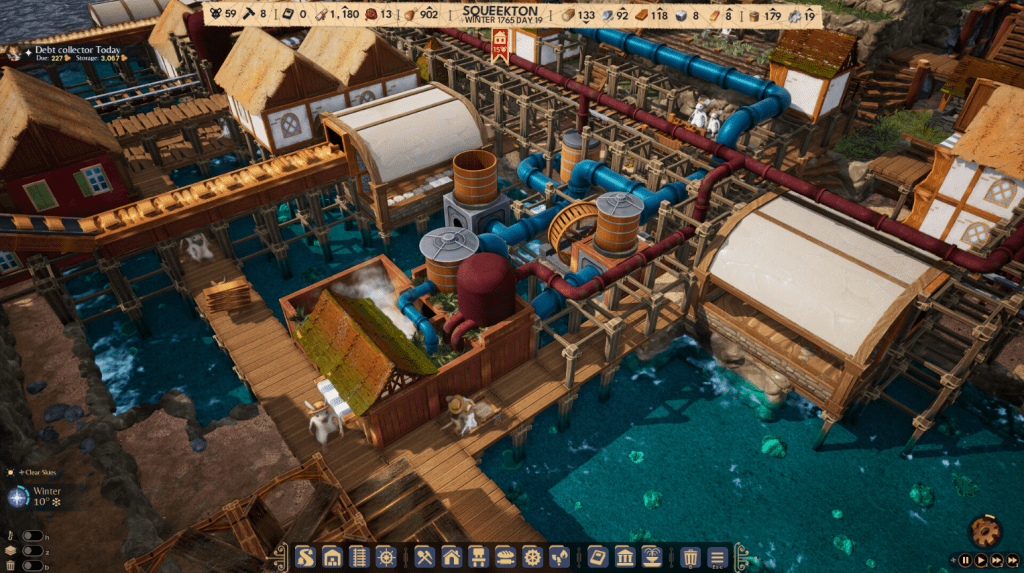
With over 40 commodities, a complex production chain, and infrastructure systems (pipelines, lifts, conveyors), Whiskerwood really leans into the “colony management plus logistics” design. This depth makes it appealing to players who enjoy optimizing, planning, and scaling up.
3. Verticality & Terraforming
Unlike many city-builders that assume a flat playing field, Whiskerwood’s map design encourages building up and down — into mountains, underground, and skywards. This gives you more freedom, and adds an interesting spatial puzzle element.
4. Independent Spirit & Early Success
Despite being an indie title, Whiskerwood made a strong entrance: it saw over 1,500 concurrent players on release. And reviews (from both early access players and press) lean very positive, praising both simulation depth and charm. Let us at Indie Games Tavern congratulate the indie gamedev Minakata Dynamics for these big milestones. Well deserved!
5. Meaningful Mouse-Colony Management
Assigning mice intelligently matters: their guilds and traits influence how well they work in different roles (gathering, industry, crafting). This layer of micromanagement elevates the colony sim beyond “just build more stuff.”
Areas for Improvement & Risks
1. Technical / Save Issues
A number of players on Reddit report save-game bugs. > “my save file has gone … if it doesn’t save again … game over” These kinds of issues can be a major setback for a colony-builder, where long-term investment is key.
2. UI & Feedback Clarity
Some community feedback highlights transparency issues around certain systems — for example, how pollution spreads, or the negative effects of certain buildings. If these systems aren’t clearly exposed, it may frustrate players trying to optimize.
3. Pacing & Early-Game Drag
Because of its simulation complexity and vertical building obligations, early stages can feel slow. One critic noted that while the design is solid, they’d like more “mechanics like defending from pirate attacks or other maps” in future updates. This could make the early game feel less immediately engaging for some.
4. Ambitious Scope = High Dev Burden
With deep production chains, vertical construction, and climate systems, Whiskerwood is building a lot. As an Early Access game, there’s risk: balancing, performance optimization, and feature completion may take time. Community patience and dev commitment will be tested.
5. Replayability / Content Variety
While the commodity system is wide, the long-term appeal will hinge on how varied the procedurally generated maps are, how many “late-game” mechanics or challenges (pirate raids, climate extremes) exist, and how rewarding it is to restart or expand.
Final Thoughts
Whiskerwood is a standout among indie city-builders: its mix of cute (mice), serious simulation (logistics + production), and thematic tension (cat overlords) gives it both heart and depth. For players who love strategic colony sims, planning multi-tier production, and designing industrial mouse cities that span sky and earth, it’s well worth diving into — especially in Early Access, where your feedback can shape its future.
To us at Indie Games Tavern, Whiskerwood is more than just a cute mice game — it’s a serious simulation wrapped in charm. If you’re willing to invest time, plan carefully, and contribute feedback early, it’s one of the most promising indie colony sims of the year.
Who Should Play It?
- Fans of colony management and city-builders who enjoy deep logistics.
- Players who like deep colony building and optimizing small but complex economies.
- Gamers who appreciate quirky, characterful worlds (mice + cats) with strategic tension.
- Fans of high quality indie games have reasonable price tag, indie gamedev who show great efforts to keep the indie spirit alive.
Who Might Wait or Skip?
- Players who dislike early access games or save-related bugs.
- Those who prefer very fast-paced games rather than methodical simulations.
- Gamers looking for simpler base-build games without complex production chains.
Whiskerwood Review by Indie Games Tavern.
Your cozy corner of indie gems. We’re more than just a indie game review channel, we’re a sanctuary for the unsung heroes of indie gamedev. Born from a love of the underdog, the quirky, and the downright brilliant, the Indie Games Tavern is your trusty guildhall for discovering the finest indie games—those hidden gems, wild experiments, and heartfelt labors that big studios often overlook. Picture this: a weathered oak table laden with scrolls—each a indie game review penned by your tavern scribes, folks like me who’ve braved the pixelated wilds to bring you tales of triumph, terror, and everything in between.
 Indie Games Tavern
Leave a comment