
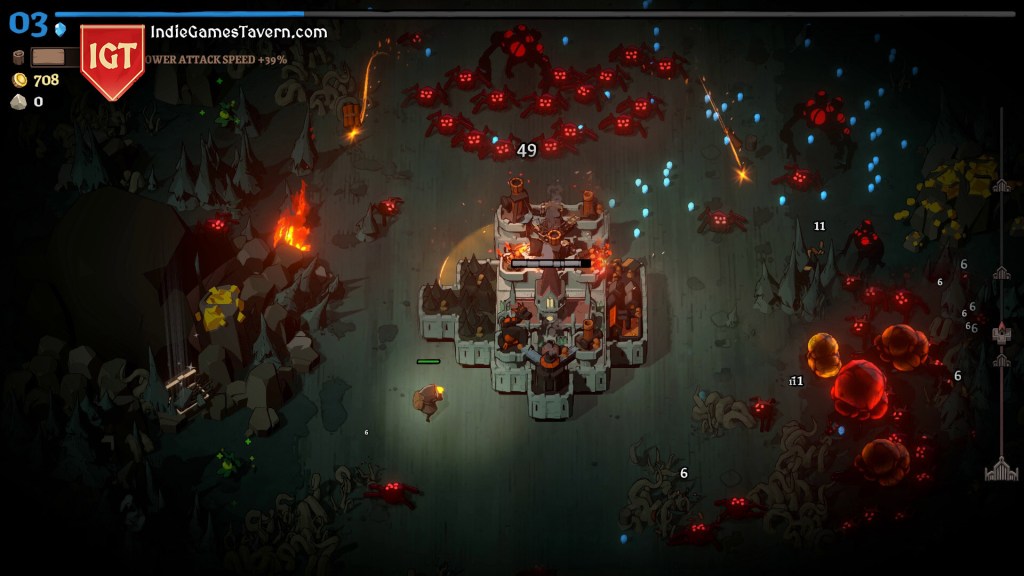
Monsters are Coming! Rock & Road is an action-roguelite / tower-survivor game developed by the indie gamedev Ludogram and published by Raw Fury. It launched on Steam on November 20, 2025.
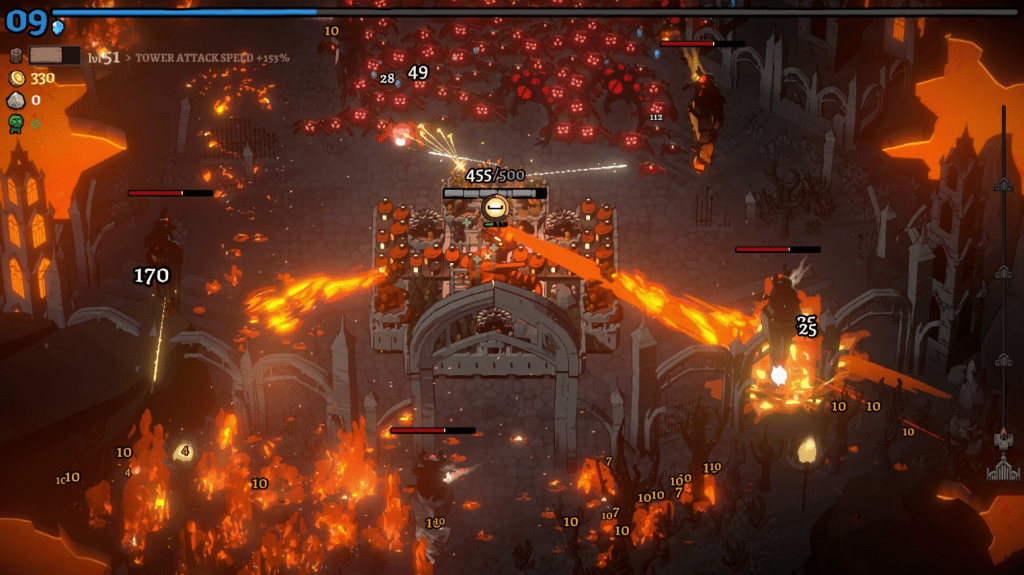
In this indie game, you control a moving city — a fortress on wheels — that must survive relentless monster hordes while gathering resources, building defenses, and scouting ahead. The twist is in combining classic “survivor-like” gameplay (inspired by games like Vampire Survivors) with tower defense mechanics and base building.
Let’s follow us at Indie Games Tavern to dive in this indie game review, now!
Gameplay & Core Loop
Here’s how Monsters are Coming! Rock & Road plays and what keeps you coming back:
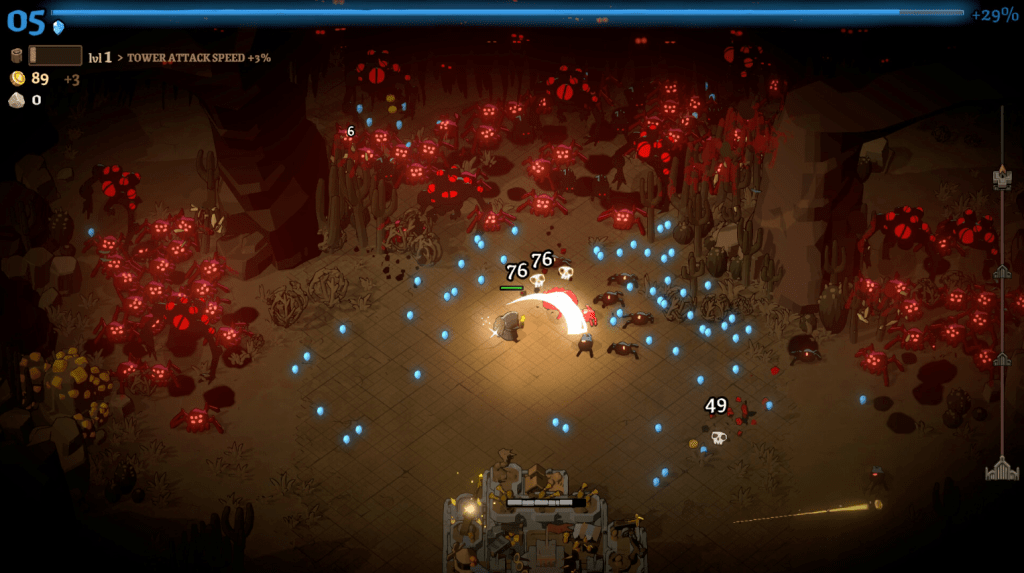
- Foraging & Resource Gathering: You control a peon (your hero) who leaves the city to collect wood, stone, and gold. These resources are essential: wood keeps the engines running, stone helps repair, and gold helps expand your fortress.
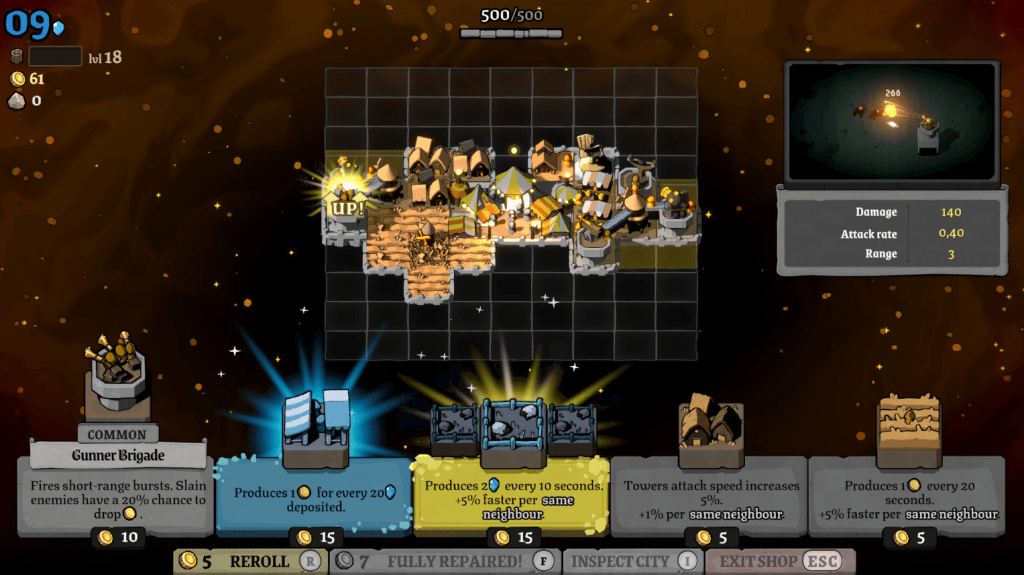
- Moving Fortress / Mobile City: Your base isn’t stationary — your city rolls “down the road,” and its layout matters. You buy and place districts (defensive buildings, towers, special structures) that protect the city from monsters.
- Strategic Building: You can build archery outposts, necromancer towers, or even fire-breathing dragon towers. The choice of which districts to build — and where — is crucial, because your city’s movement means positioning and timing matter.
- Risk vs Reward: While foraging, you must decide whether to stick to the safer path or deviate for more lucrative rewards (hidden shelters, side hordes). But wandering too far is risky — you need to return to fortify your city before it’s attacked.
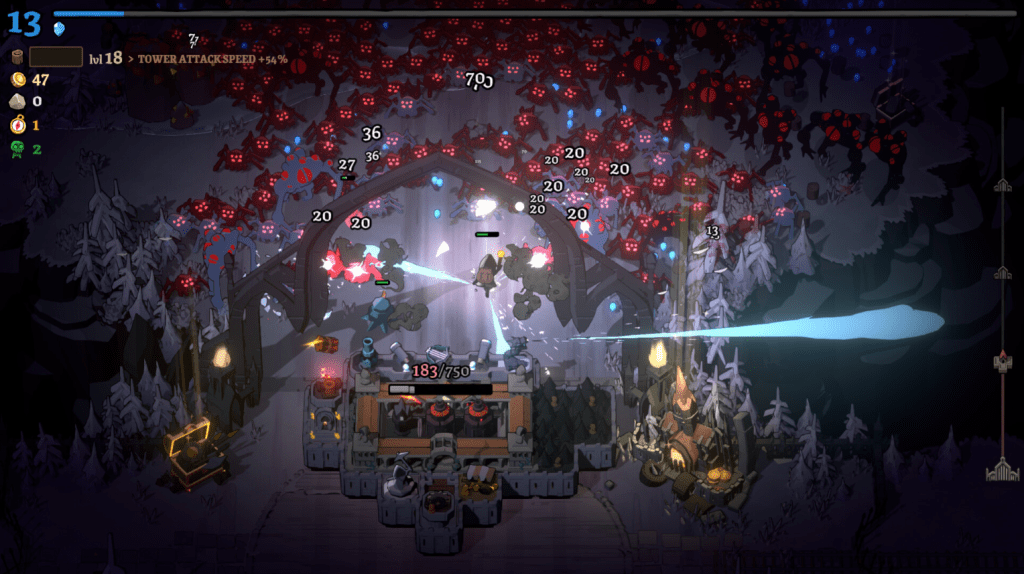
- Combat & Bosses: You’ll fight waves of monsters and face “bad ass” bosses. Your hero improves over runs, gaining abilities or better weapons to deal with stronger threats.
- Progression: There’s a persistent progression system. As you run, you unlock “power boosts,” better district options, and upgrades for both hero and city. Even if your hero dies, the run doesn’t necessarily end — the city continues until it’s destroyed.
- Permanent Unlocks: You collect “compasses” at the end of runs, which feed into long-term progression, helping future runs.
- Run Structure: Each run challenges you to balance scavenging with defense. The ever-moving city forces players to think on their feet: when to build, when to forage, when to defend.
We Indie Games Tavern played this indie title for hours and everyone agreed that this core loop is well-crafted by the talented ones who deeply understood the market, of course we’re talking about the indie gamedev Ludogram.
What Works Really Well
Genre Fusion
The way Monsters are Coming! mixes “bullet-heaven” survivor mechanics with tower defense and base-building is fresh. Rather than simply fighting hordes, you’re constantly growing and protecting your mobile city.
Strategic Depth
Deciding which districts to build, where to place them, and when to scout for resources gives real strategic tension. It’s not just a mindless survival run — there’s meaningful risk vs reward.
Risky Foraging Feels Impactful
Straying into the wild to gather resources is engaging: richer rewards await off the beaten path, but the danger increases. This loop creates a nice tension between exploration and defense.
Persistent Progression
The compass / long-term progression system helps the game feel less punishing. Even failed runs contribute to your future potential, which encourages replayability.
Class Variety
Players can choose different “peon” classes — from melee fighters to casters — which allows different play styles.
Strong Aesthetic & Atmosphere
The pixel art is dark but charming, matching the game’s tone of a grim but hopeful journey. According to Gamepressure, the visuals lean into “dark tones”. Also, SteamDB confirms full controller support, making the game accessible for different play setups.
Good Value
At launch, the game is reasonably priced (with an introductory discount) — many early players on Steam note that the cost-to-content feels fair.
Everyone at Indie Games Tavern is amazed by how the indie gamedev Ludogram mixed Top-sell genres into one incredibly hooked indie title, and its price shocked us as well.
Areas for Improvement & Considerations
Repetition Risk
Some players mention that, after a few hours, the loop could become repetitive: foraging, building, defending — if the variety of towers or map segments is limited, runs might feel similar. > “The progression is pretty much stat-based, it will probably get dull after a couple of hours”.
Controls / UX Issues
A few demo players reported control problems, especially on certain laptops. > “I had some issues with the controls on my laptop … I am hoping it runs on Steam Deck …” Although SteamDB shows full controller support, some input/UX tweaks may still be necessary for optimal comfort.
Balance Tuning
Because of the “build your city” mechanic, tower placement and upgrade paths could heavily favor certain strategies. If not well balanced, meta builds could dominate, reducing experimentation.
d. Progression Clarity
While there’s long-term progression (compasses, run-based unlocks), newer players may find it unclear how to best leverage these unlocks early on. There’s a risk that early runs feel “grindy.”
End-Game & Replayability
It’s still unclear (from available sources) how much end-game content or variation there is once players have unlocked a lot of districts. If the late-game or high-tier content is limited, long-term retention may suffer.
Performance
Though not widely reported, as an action + roguelite + tower defense game, performance may become a concern on lower-end machines, especially with many on-screen monsters and tower effects.
Final Thoughts
Monsters are Coming! Rock & Road, developed by the indie gamedev Ludogram, is a bold and imaginative blend of roguelite, tower defense, and “survivor-like” gameplay. The core idea — defending a mobile city while scavenging for resources — feels both novel and strategically rich. The risk/reward loop of foraging and building makes runs feel meaningful, and the persistent progression system gives each attempt weight.
To us at Indie Games Tavern, while there’s potential for repetition or balance issues, the game’s early reception (demo included) is very positive, and its price point makes it accessible for many players. If you enjoy strategy-heavy pick-your-own-path gameplay with survival tension and a base-building twist, this is well worth your attention.
Who Should Play It?
- Roguelite Fans who like risk + reward and meaningful run-based progression.
- Tower Defense Enthusiasts who want a twist — defending not just a static base but a moving one.
- Survivor-Game Players (Vampire Survivors style) who are interested in adding more strategic depth.
- Strategists & Planners who enjoy optimizing layouts, building paths, and juggling resource priorities.
- Indie Game Supporters looking for creative, hybrid-genre experiences.
Who Might Wait or Skip It?
- Casual Players who prefer more relaxed, low-stakes games might find the foraging + defense loop stressful.
- Those Who Dislike Repetition: If you worry about runs feeling similar over time, you might wait for more content / updates.
- Players Sensitive to Controls: If you’re on a laptop or smaller screen, check the demo first to make sure the control feels good.
- Budget-Cautious Gamers: Even though it’s cheap, if you want to make sure the game lasts, you might wait for more feedback or DLC.
- Non-Strategists: If you aren’t keen on base building or city planning, the defensive layer may feel like unnecessary overhead.
Monsters are Coming! Rock & Road Review by Indie Games Tavern.
Your cozy corner of indie gems. We’re more than just a indie game review channel, we’re a sanctuary for the unsung heroes of indie gamedev. Born from a love of the underdog, the quirky, and the downright brilliant, the Indie Games Tavern is your trusty guildhall for discovering the finest indie games—those hidden gems, wild experiments, and heartfelt labors that big studios often overlook. Picture this: a weathered oak table laden with scrolls—each a indie game review penned by your tavern scribes, folks like me who’ve braved the pixelated wilds to bring you tales of triumph, terror, and everything in between.
 Indie Games Tavern
Leave a comment