
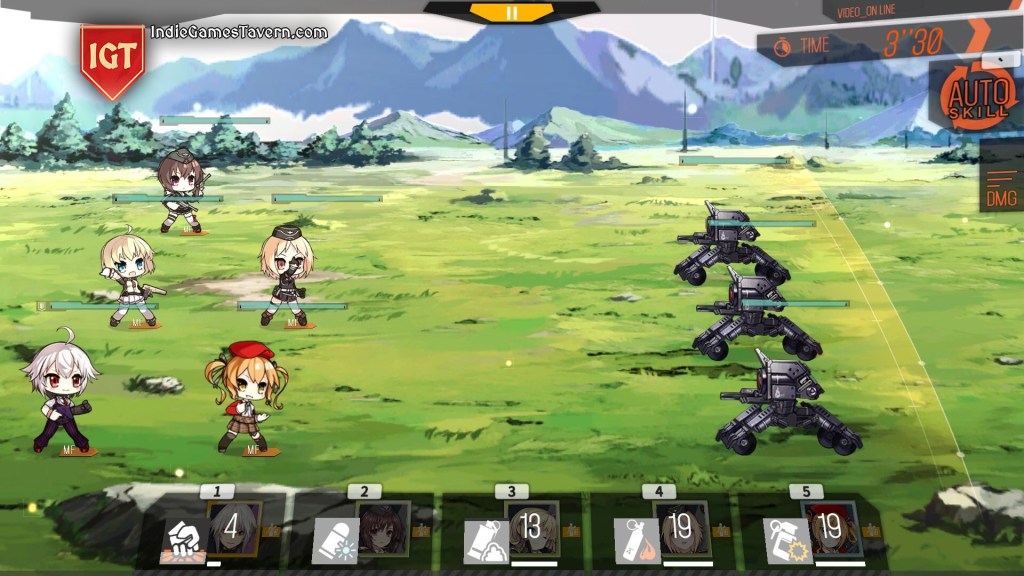
Girls’ Frontline is a tactical RPG / strategy game published via Steam in late 2025 — bringing a long-running mobile / global franchise to PC with official support. In the game you play as a “Commander” leading squads of “Tactical Dolls” (T-Dolls) — android girls each representing a real-world firearm. The setting: a future where global conflict and societal collapse have reshaped warfare, and these Tactical Dolls are deployed to restore order and fight for survival.
Girls’ Frontline combines strategy-RPG squad mechanics, collectible units (via gacha-style recruitment), and story/campaign missions — offering both long-term collection and tactical challenge.
Let’s follow us at Indie Games Tavern to dive in this indie game review, now!
2. Gameplay & Core Loop
Here’s how Girls’ Frontline works in practice:
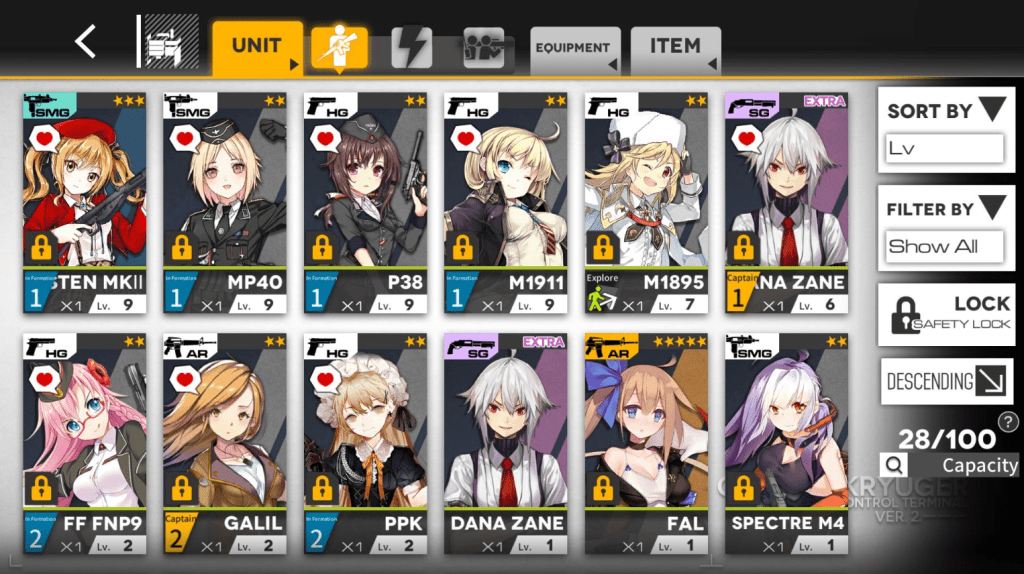
- Collect & Customize T-Dolls: As Commander, you recruit T-Dolls (the “girls with guns”). Each T-Doll corresponds to a certain firearm type (Assault Rifle, SMG, Shotgun, etc.), has unique stats/skills, and often distinct art & voice acting.
- Form Squads / Echelons: You build squads (echelons) of T-Dolls for missions. Squad composition, weapon-type balance, and skill selection matter.
- Tactical / Strategic Combat: Before deployment, you plan — choose squad, position, and evaluate the mission. Combat is a blend: some auto-attack elements, but you manage formations, special abilities (skills), support echelons, and can influence outcomes manually.
- Missions & Progression: Players take on story missions, logistics or support missions, and special operations. Completing missions levels up T-Dolls, unlocks resources, gear, and more.
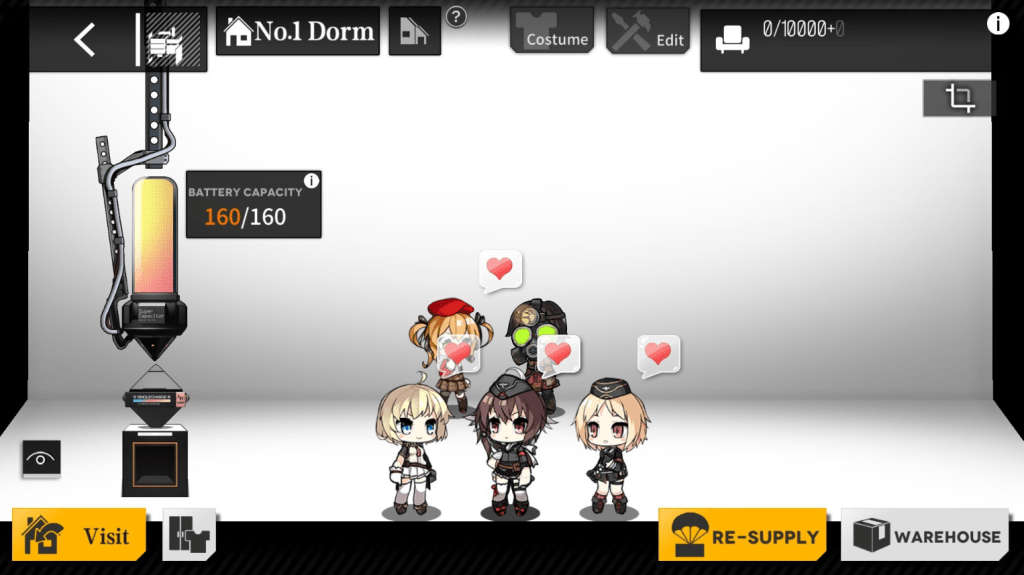
- Collection & Customization / Social Elements: Beyond combat, there’s unit customization (costumes, dormitory decorations, affection/bonding systems). The “collection + personalization” loop appeals to players who enjoy collecting and customizing units.
- Free-to-Play / Gacha Mechanic: Recruitment of T-Dolls involves gacha-style mechanics — randomized draws for characters, equipment, etc.
So the typical loop of Girls’ Fronline is: recruit dolls → build squad → pick mission → deploy/automated combat + manual skill/strategy → collect rewards → upgrade / build roster → repeat.
What Works Really Well
✅ Massive Roster & Unit Variety
With hundreds of unique T-Dolls — each representing different firearms and combat roles — Girls’ Frontline offers a lot of variety for collection, squad-building, and personalization. This variety supports many playstyles: some players like balanced squads, others like specialized teams (e.g. heavy weapons, support-oriented, etc.).
✅ Strategic Depth + Accessibility Blend
Combat blends automation (for convenience) with enough strategic choice (skill activates, squad composition, formation, support echelons) to remain engaging. This lowers the barrier for new players while rewarding more thoughtful planning.
✅ Strong Presentation: Art & Character Appeal
The T-Dolls are often well-designed, with distinctive art, personalities, and voice acting — which adds a strong character-based appeal beyond raw mechanics. For players who enjoy anime / stylized military-android fiction, this gives extra flavor and investment in the roster.
✅ Free-to-Play Entry Point
Being free on Steam makes it accessible — you can try the core gameplay loop without paying, then decide whether to invest in the gacha / collection side.
✅ Narrative + World-Building
Beyond fights, Girls’ Frontline has a lore-heavy setting: post-war geopolitics, faction conflict, “autonomous dolls,” ethical quandaries around AI and warfare. If you enjoy science-fiction with guns + android-girls, there’s a lot of context motivating missions.
✅ Active Community & Ongoing Support
Given the long history of the franchise (originally mobile), there’s a dedicated community, fan content, guides, and frequent updates — making the experience richer and giving assurance that support won’t dry up quickly.
4. Areas for Improvement & Considerations
⚠️ Gacha / RNG & Monetization
As with many “collectible-unit” games, obtaining the best T-Dolls often depends on luck. If you dislike randomized draws or pay-to-win / pay-to-collect mechanics, this may leave you frustrated or spending more than expected.
⚠️ Auto-Battles & Limited Direct Control
Although there is tactical planning and skill activation, many aspects of combat are automated (especially in mobile/older versions). For players seeking full direct control, the “hands-off” aspects may feel unsatisfying.
⚠️ Fanservice / Mature Content
The game includes characters with “nudity and pornographic designs” as noted by developers — some dialogues / images can be explicit or mature. This may not suit all players, especially those uncomfortable with such presentation.
⚠️ Long-Term Commitment for “Best” Play
To build a powerful roster, succeed in challenging missions, and experience deeper content, you may need to invest significant time (or money) — leveling dolls, upgrading equipment, managing resources. This can become grindy or slow, especially early on.
⚠️ Mixed Reviews & Entry Hurdles
Some players have reported optimization or performance issues (especially at launch / on weaker hardware), plus the need to create/maintain a specialized account (beyond just Steam) to play.
Final Thoughts
Girls’ Frontline is a solid, anime-style tactical RPG/strategy game that shines if you like collecting units, building squads, and enjoying a blend of strategic planning with episodic missions. Its large roster, strong character art & personalities, and the core tactical loop offer a lot of value — especially for free.
That said, it’s not for everyone. The reliance on gacha, the auto-battle features are significant caveats. If you don’t like random draws, prefer full control in combat, the experience may feel frustrating or limited.
But for what it is — a long-running, community-driven strategy-RPG with anime-style art and a large cast — Girls’ Frontline remains one of the more compelling “T-Doll” games out there. It’s especially appealing if you enjoy squad-based tactics + collectible characters, or if you’re curious about the franchise and willing to dive in even with its imperfections.
Who Should Play It?
- Fans of anime / moe + military-gun fiction — the character art, voice lines, and T-Doll concept are a strong draw if this aesthetic appeals.
- Players who enjoy squad-based strategy + RPG progression — building squads, managing resources, customizing units, and tactical deployment.
- Collectible / gacha-style game players — if you like collecting a wide roster and experimenting with team compositions, T-Dolls offer a lot of variety.
- Casual-to-midcore players — the auto-battle + accessible loop makes it manageable without huge time investment, yet rewarding if you do invest time.
- Free-to-play friendly gamers — you can enjoy much of the game without spending money (though top-tier dolls/equipment may require luck or investment).
Who Might Wait or Skip It?
- Players who dislike gacha / RNG mechanics — dependable progression & favorite dolls may require luck or spending.
- Those wanting full-control, tactical-depth combat — auto-battle and limited direct control may feel shallow vs. “fully tactical” games.
- Players sensitive to fanservice / mature content — some character designs and artwork are explicit.
- People expecting a “complete” RPG with deep story & polish from day one — Girls’ Frontline is a live-service / gacha-driven game, with trade-offs in polish, consistency, and long-term commitment.
Girls’ Frontline Review by Indie Games Tavern.
Your cozy corner of indie gems. We’re more than just a indie game review channel, we’re a sanctuary for the unsung heroes of indie gamedev. Born from a love of the underdog, the quirky, and the downright brilliant, the Indie Games Tavern is your trusty guildhall for discovering the finest indie games—those hidden gems, wild experiments, and heartfelt labors that big studios often overlook. Picture this: a weathered oak table laden with scrolls—each a indie game review penned by your tavern scribes, folks like me who’ve braved the pixelated wilds to bring you tales of triumph, terror, and everything in between.
 Indie Games Tavern
Leave a comment