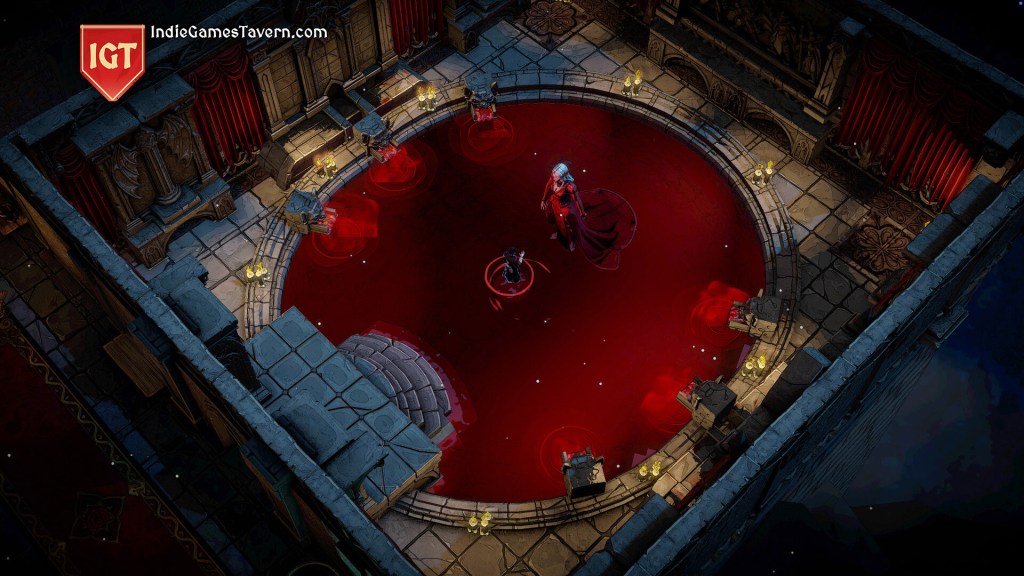
Night Swarm is a vampire-themed roguelite action game from the indie game developer Fubu Games, released on Steam on December 4, 2025. You play as a young Vampire Lord rising to power, battling hordes of cursed werewolves and other corrupted creatures by night — while building your strength, allies, and influence by day.
Night Swarm aims to mix “bullet-hell / action + roguelite + RPG + progression/hub mechanics,” with run-based combat, upgradeable vampire powers, companion-summoning, and a castle-base hub where you prepare between runs.
Let’s follow us at Indie Games Tavern to dive in this indie game review, now!
Gameplay & Core Loop
Here’s how Night Swarm plays:
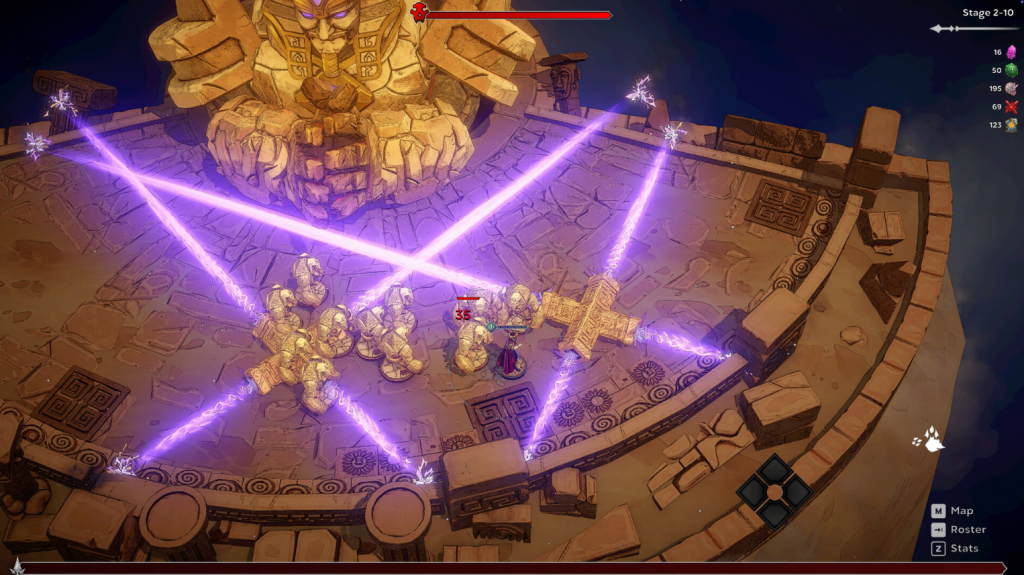
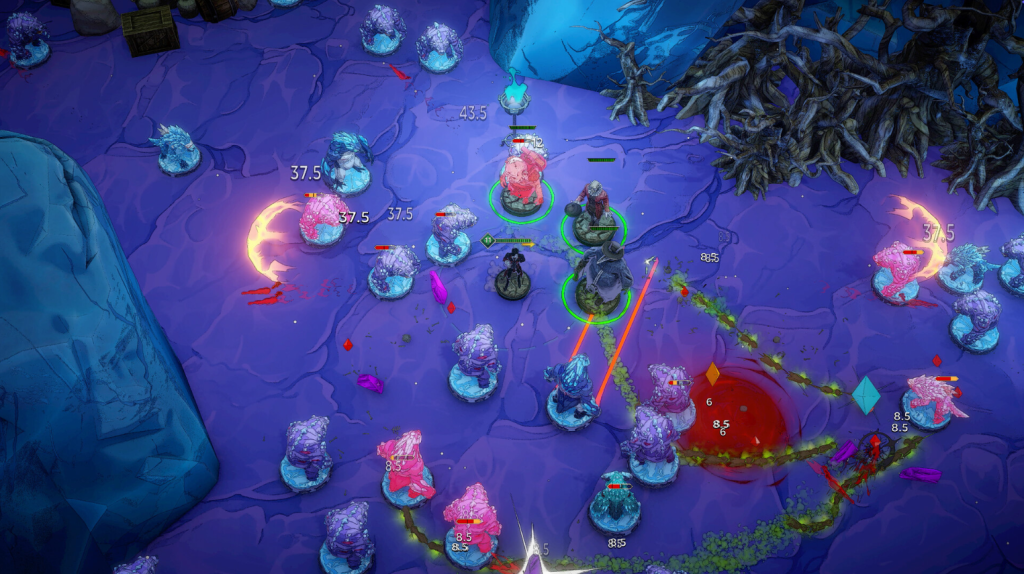
- Wave-based Combat vs. Werewolf Hordes — Each run has you fighting waves of enemies (werewolves and cursed beasts), surviving as long as possible. The action is bullet-hell / hack-and-slash style, where reflexes, positioning, and abilities matter.
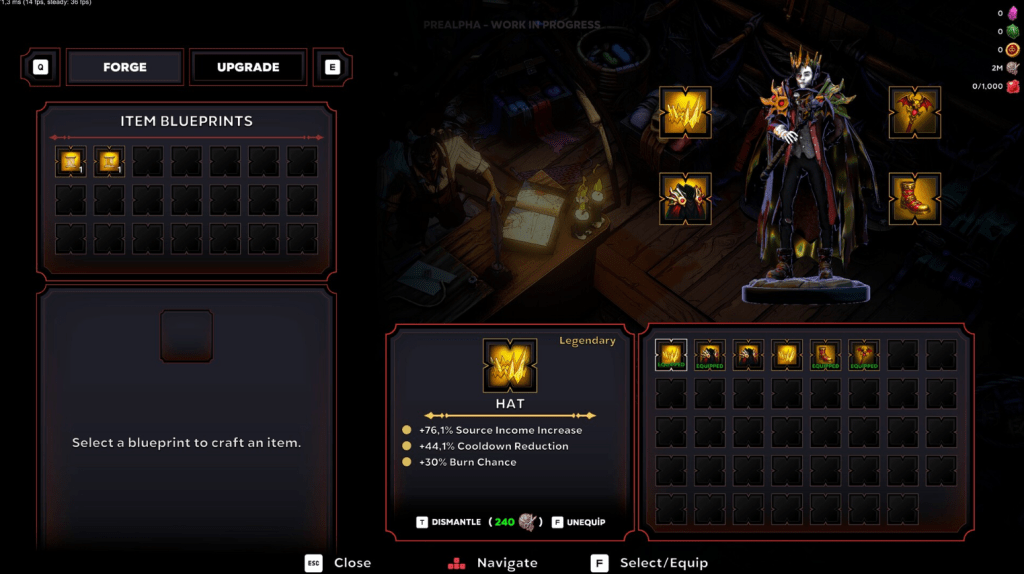
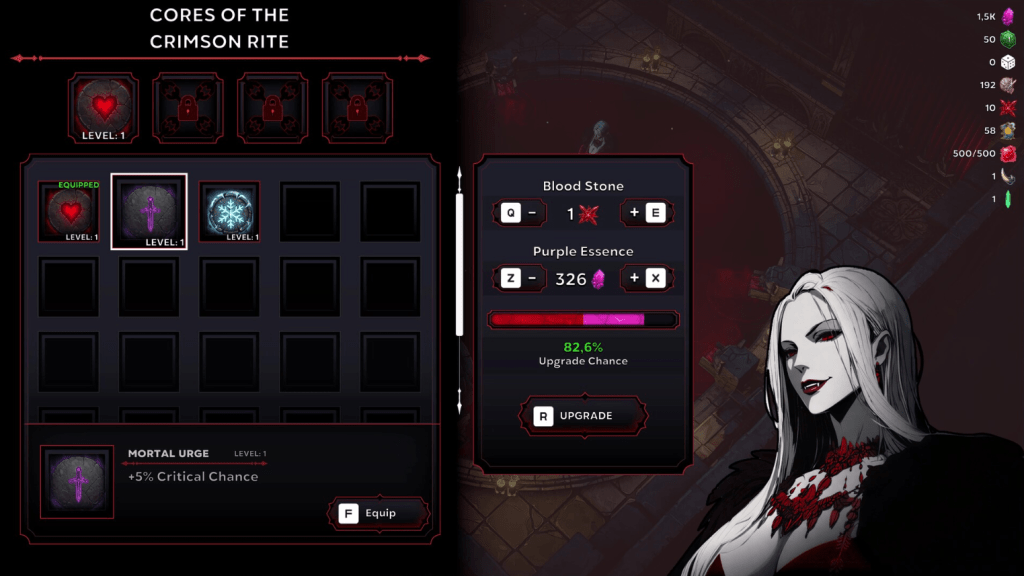
- Castle Hub & Meta-Progression — Between runs, you return to your castle. Here you visit NPCs (Talent Shop, Item Shop, etc.), upgrade, choose talents, prepare items/gear, manage resources, and ready yourself for the next run.
- Companions & Allies — As you grow in power, you can unlock and summon loyal companions to fight alongside you, adding variety to combat and strategy.
- Skill / Power & Progression Systems — Through gold, ancient totems, or other mechanics, you unlock “forgotten powers, scrolls, skills” that augment your character permanently or for that run — shaping builds and playstyle.
- Boss Battles & Challenges — The game promises boss fights and “colossal monstrosities,” offering spikes of challenge and variety beyond standard waves.
- Short-ish Runs & Replayability — According to reviewers of the demo, runs tend to be relatively short (map-to-map pacing, quick encounters), making it a viable pick for players with limited time but who enjoy repeated tries.
Let us at Indie Games Tavern make it short: prepare in castle → enter night, fight hordes → survive or die → return, upgrade, choose powers/companions → repeat with variation. You can see this familiar loop in the other indie titles that we don’t want to mention here, we know you know, haha. The main point here is, this loop is so addictive that even if we experienced it in other games, we still want to try it again in Night Swarm, and we still got hooked. Could we say this is the indie-game-core-loop? Read ’til the end of this indie game review article to explore more.
What Works Really Well
✅ Strong Vampire / Horror-Fantasy Theme
Night Swarm nails the vampire-lord fantasy: being a dark master, commanding night, battling werewolves. The theme gives personality, atmosphere, and a sense of identity beyond generic action or roguelite tropes.
✅ Action + Roguelite + RPG Hybrid Gives Variety
By combining bullet-hell / action combat with roguelite resets and RPG-style upgrades/companion systems, Night Swarm gives both immediate thrill (in combat) and longer-term investment (in upgrades/builds). This hybrid appeal helps attract both action players and progression-seekers.
✅ Captivating Replayability & “Just One More Run” Loop
Users highlight how addictive the quick runs + upgrades + risk-reward are. One review noted: “The game really respects your time… run lasts about 30 minutes… gives that ‘just one more run’ feeling.”
✅ Companion / Build Depth for RPG Fans
Summons, gear upgrades, talent trees / powers, companion unlocking — these systems allow variety in play-style. You’re not locked to one build: depending on what upgrades or allies you choose, each run can feel distinct.
✅ Accessible for Short Sessions
Because runs are relatively short and loadouts/upgrade choices are persistent, it’s friendly to players who don’t have hours per session. Good for quick bursts of gameplay rather than long commitments.
To us at Indie Games Tavern, the part makes Night Swarm so addictive is the game balancing, between upgrades and run difficulties. You should feel the wanted to upgrade after each run, and the wanted to try next run after upgrading (to see how much stronger you are). As an indie game review site, we always look for the ‘perfect’ game balancing like Night Swarm, not too easy to get bored, not too hard to quit early, just enough of fun.
Areas for Improvement & Considerations
⚠️ Premature — Still Needs Polish & Depth
Since Night Swarm launches only now (Dec 2025), many features may still be rough. Some reviewers note that boss fights feel underwhelming (long health bars, small arenas, slow pace).
One review wrote that “character movement speed is … abysmal … when stage times are just minutes,” making portions feel like chores — a design choice that may detract from enjoyment.
⚠️ AI-Generated Voices / Dialogue May Hurt Immersion
Voice acting has been criticized: some lines feel flat or lifeless, which reduces immersion in what is otherwise a moody, atmospheric world.
⚠️ Random-based Difficulty
Because enemies come in “hordes” and there are roguelite elements (random drops, upgrades), runs can swing wildly in difficulty or success — a bad random spawn might make a run frustrating or feel unfair. This is typical for roguelites, but might deter players seeking consistency.
⚠️ Uncertain Long-Term Depth / Content Variety
To stay fresh in the long term, the game will need a wide variety of companions, weapons/powers, enemy types, procedural variation, and meaningful meta-progression. As of launch, it’s unclear how large or varied the final content pool will be.
Final Thoughts
Night Swarm is a promising, moody, and stylish vampire-themed roguelite that delivers satisfying action, replayable runs, and enough RPG elements to keep you invested. If you enjoy dark fantasy, bullet-hell or action-roguelites, and don’t mind some rough edges, this game is very likely worth your time.
To us at Indie Games Tavern, expect a bit of roughness, potential balance issues, and variable difficulty. But the core idea works, and the early community response is positive. If the developers continue polishing and expanding, Night Swarm could become a notable indie hit near the end of 2025 / start of 2026.
Who Should Play It?
- 🧛♂️ Fans of vampire / dark-fantasy / gothic horror settings — if you enjoy playing as a dark lord rather than a hero.
- 🎯 Players who love roguelite + action + bullet-hell hybrids — run-based loops with risk/reward, fast combat, and replayability.
- 🛠️ Gamers who enjoy builds, upgrades, companions, and customization — experimenting with powers, gear, and follower combinations.
- 🕒 People with limited playtime — runs are short and satisfying, making it good for quick sessions.
- 🧑🤝🧑 Players who like “just one more run” games — easy to pick up, drop, and return to with incremental progression each time.
Who Might Wait or Skip It?
- 😌 Players who dislike rough, indie-scale polish or early access bumps — if you prefer a fully finished, polished experience.
- ❗ Those who dislike randomness or unpredictable difficulty spikes — roguelite + bullet-hell can be chaotic and unforgiving.
- ❤️🩹 Gamers seeking deep narrative or strong story focus — Night Swarm seems more about action and progression than heavy plot or story depth (especially with criticized voice acting).
- 💤 Players who dislike slower-paced or drawn-out boss fights — if drawn-out fights in tight arenas aren’t your style, some boss encounters may frustrate.
Night Swarm Review by Indie Games Tavern.
Your cozy corner of indie gems. We’re more than just a indie game review channel, we’re a sanctuary for the unsung heroes of indie gamedev. Born from a love of the underdog, the quirky, and the downright brilliant, the Indie Games Tavern is your trusty guildhall for discovering the finest indie games—those hidden gems, wild experiments, and heartfelt labors that big studios often overlook. Picture this: a weathered oak table laden with scrolls—each a indie game review penned by your tavern scribes, folks like me who’ve braved the pixelated wilds to bring you tales of triumph, terror, and everything in between.
 Indie Games Tavern
Leave a comment